Cageless Shark Diving in Oahu Open Water Pelagic Shark Dive Tours
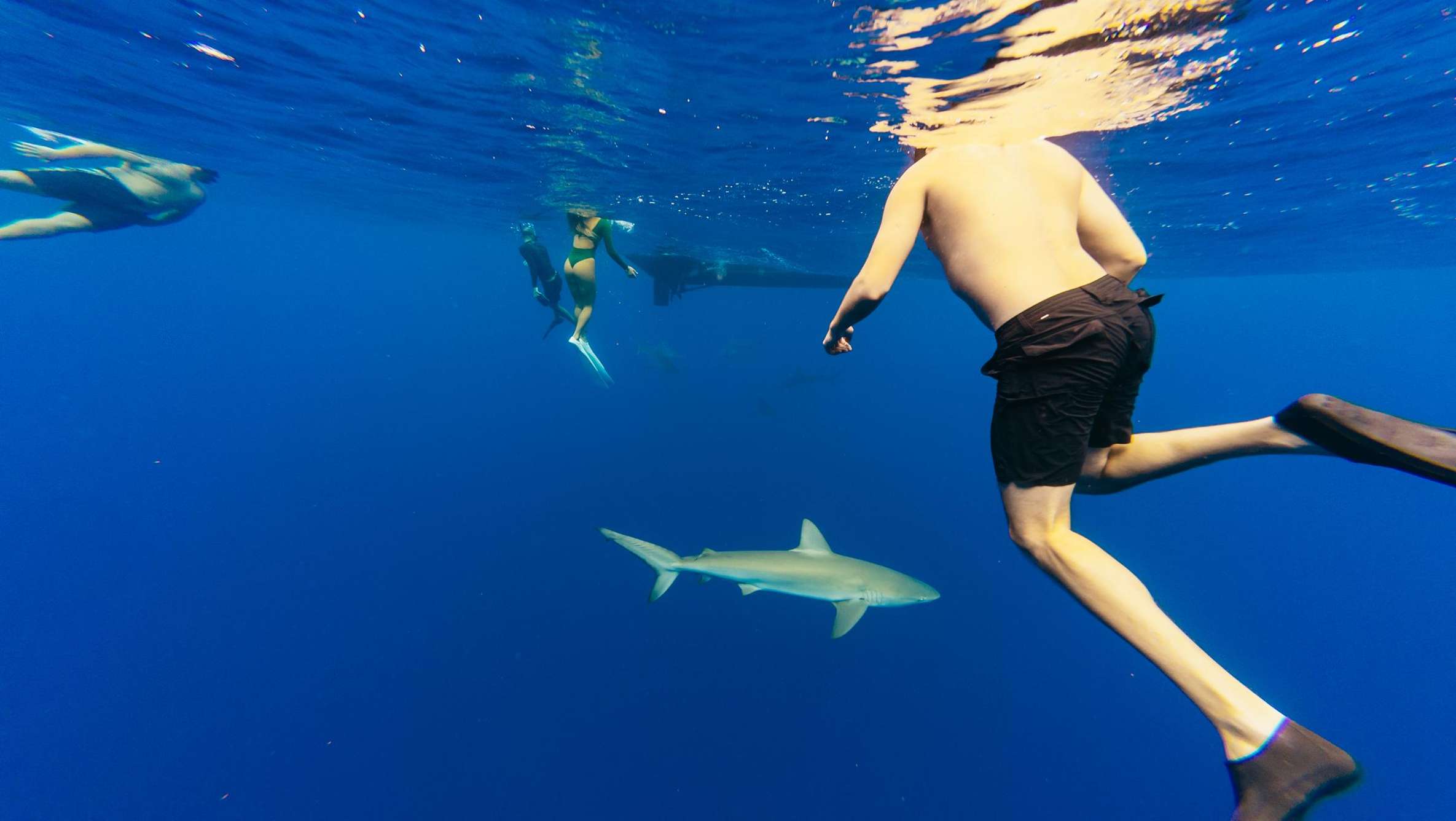
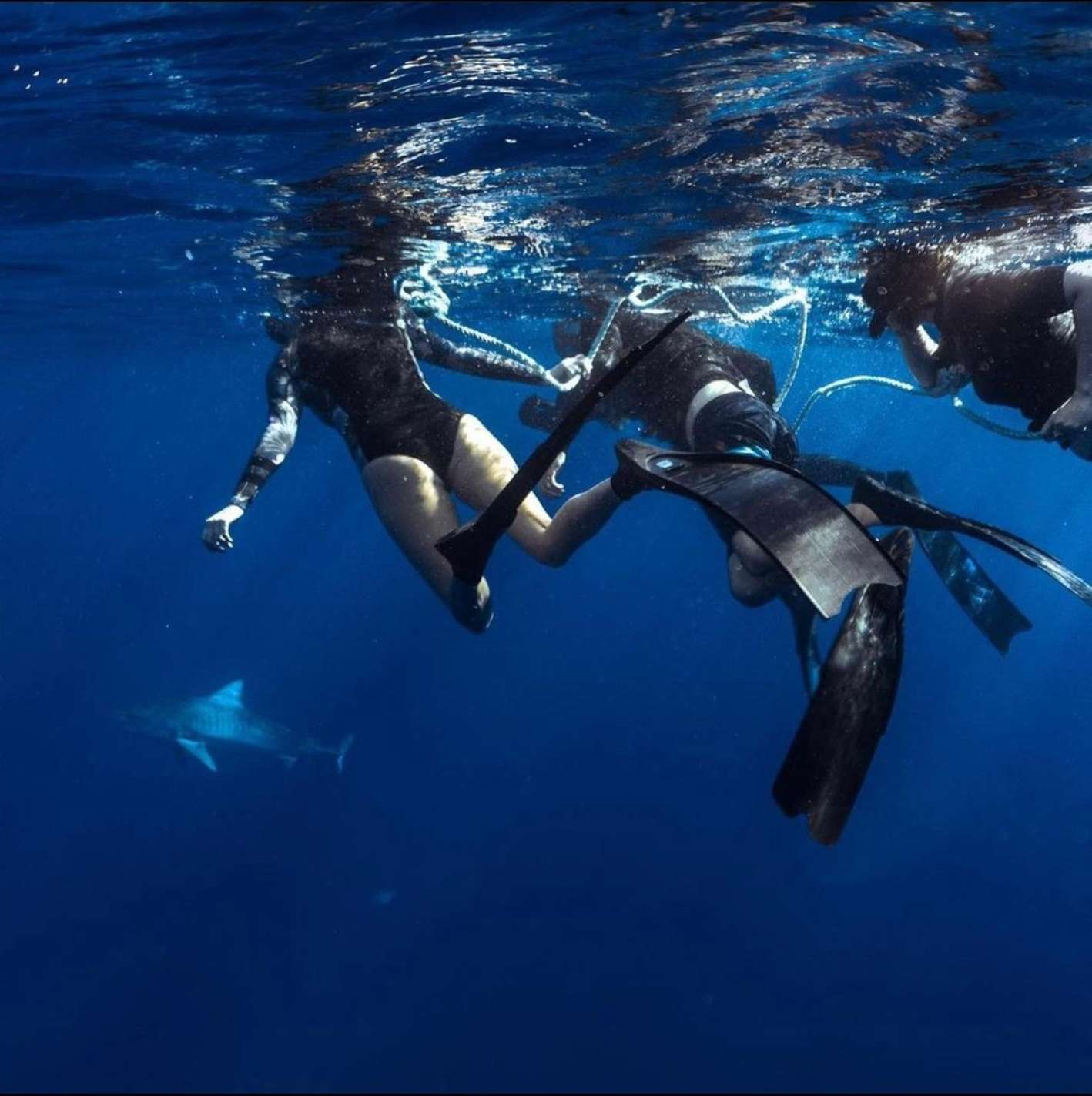
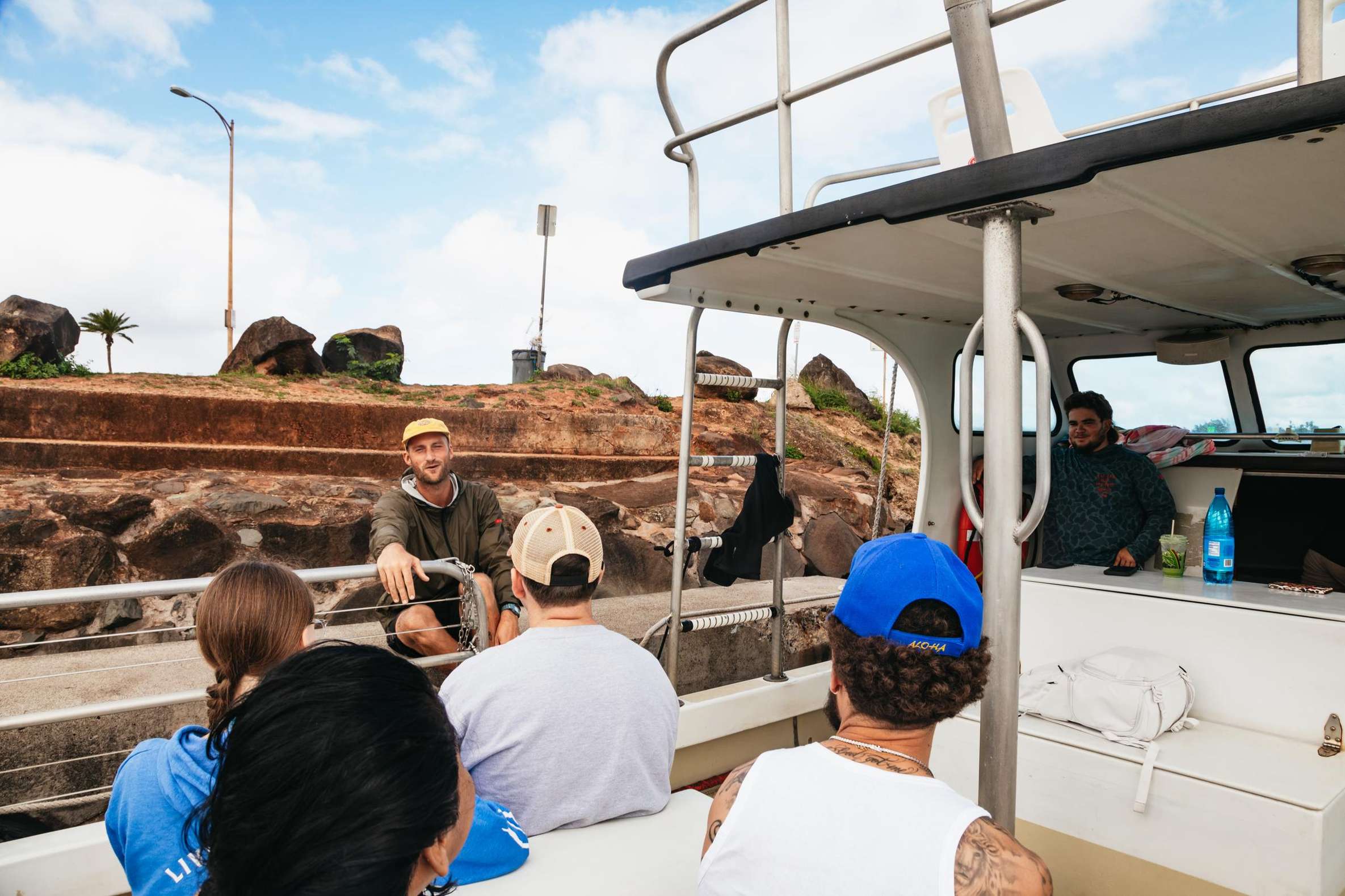
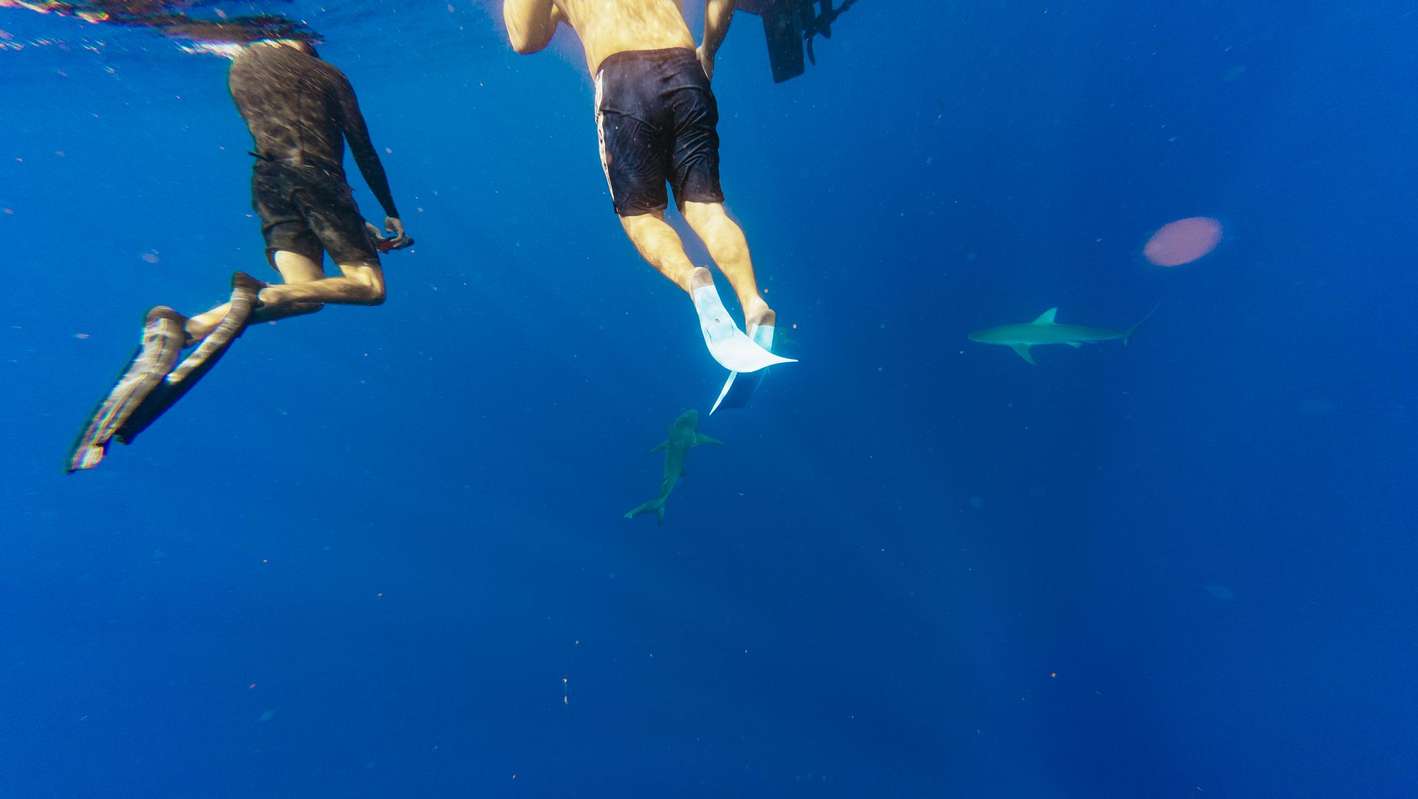
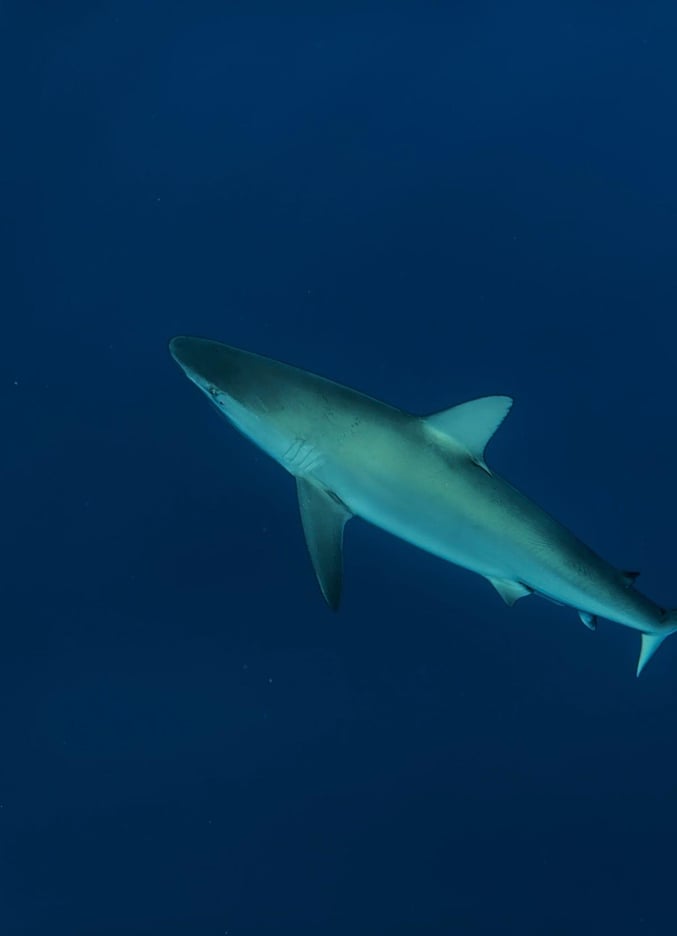
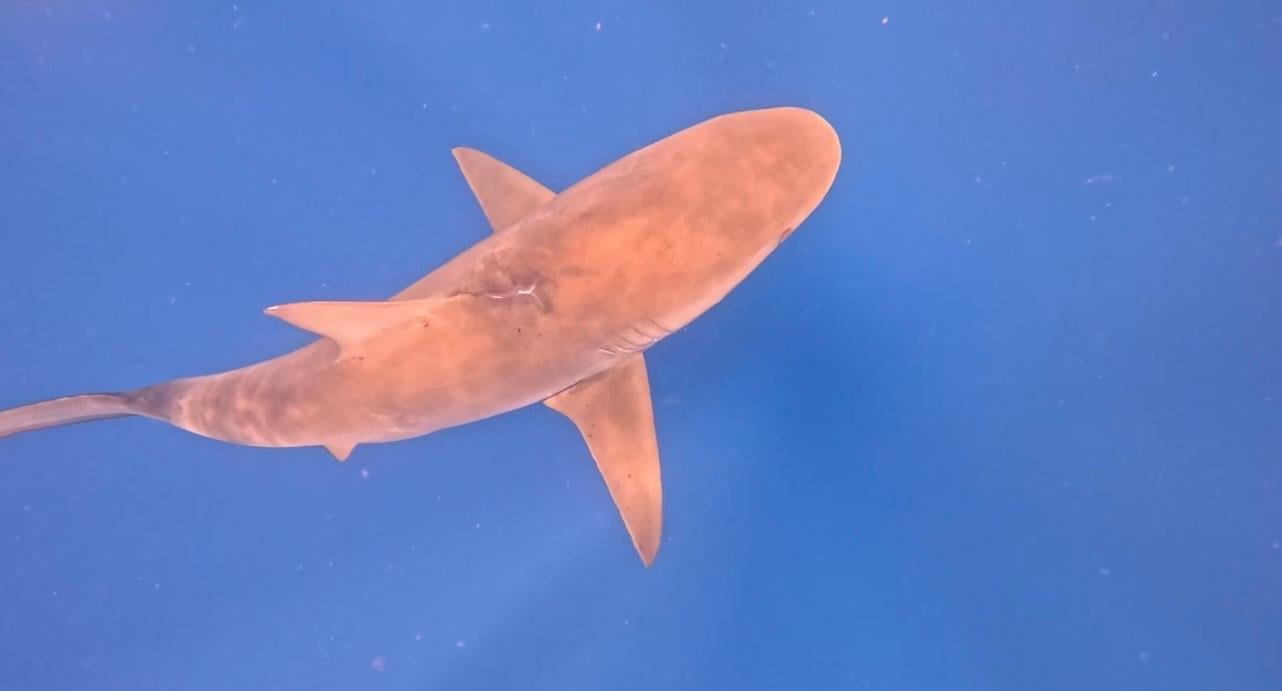
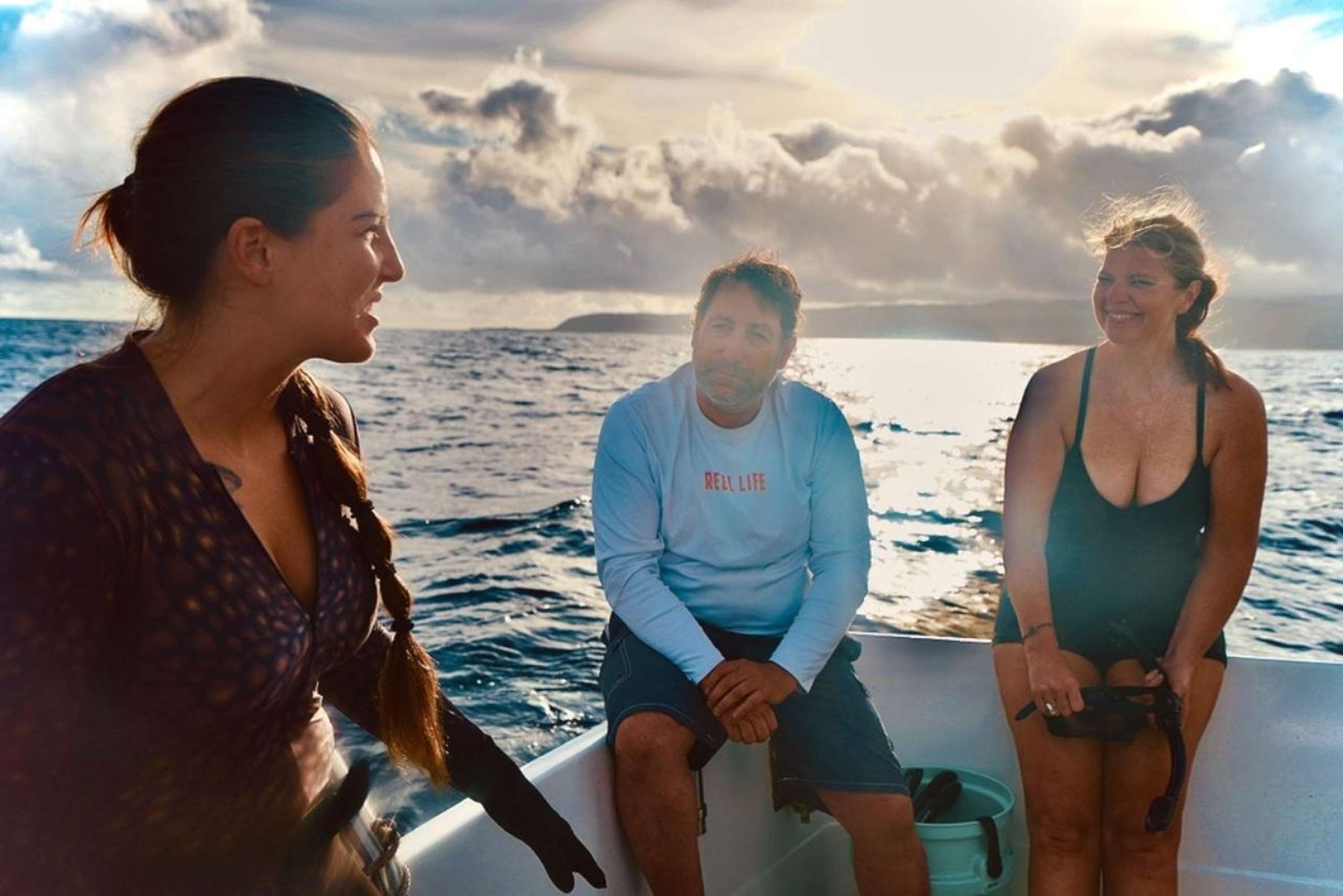
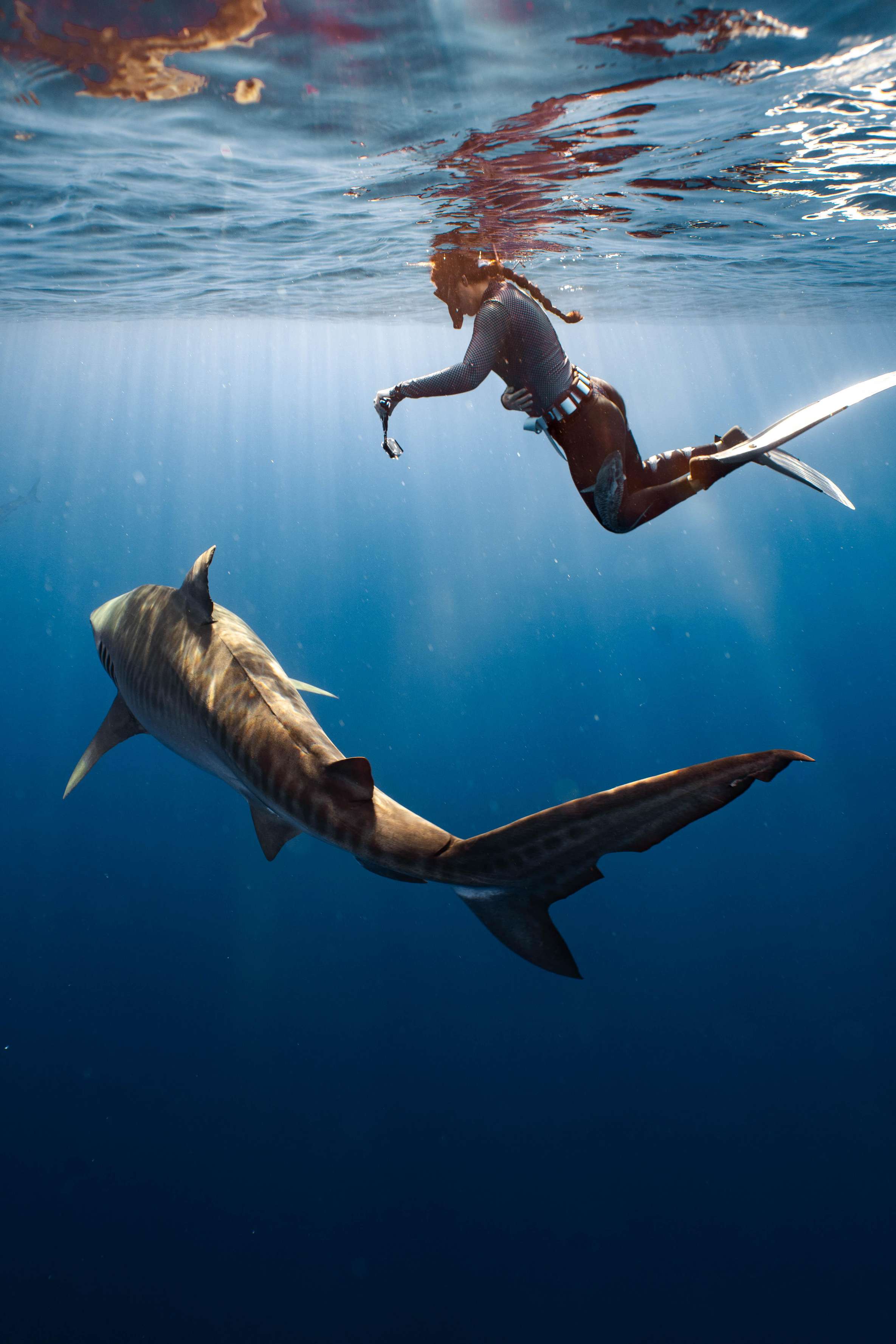
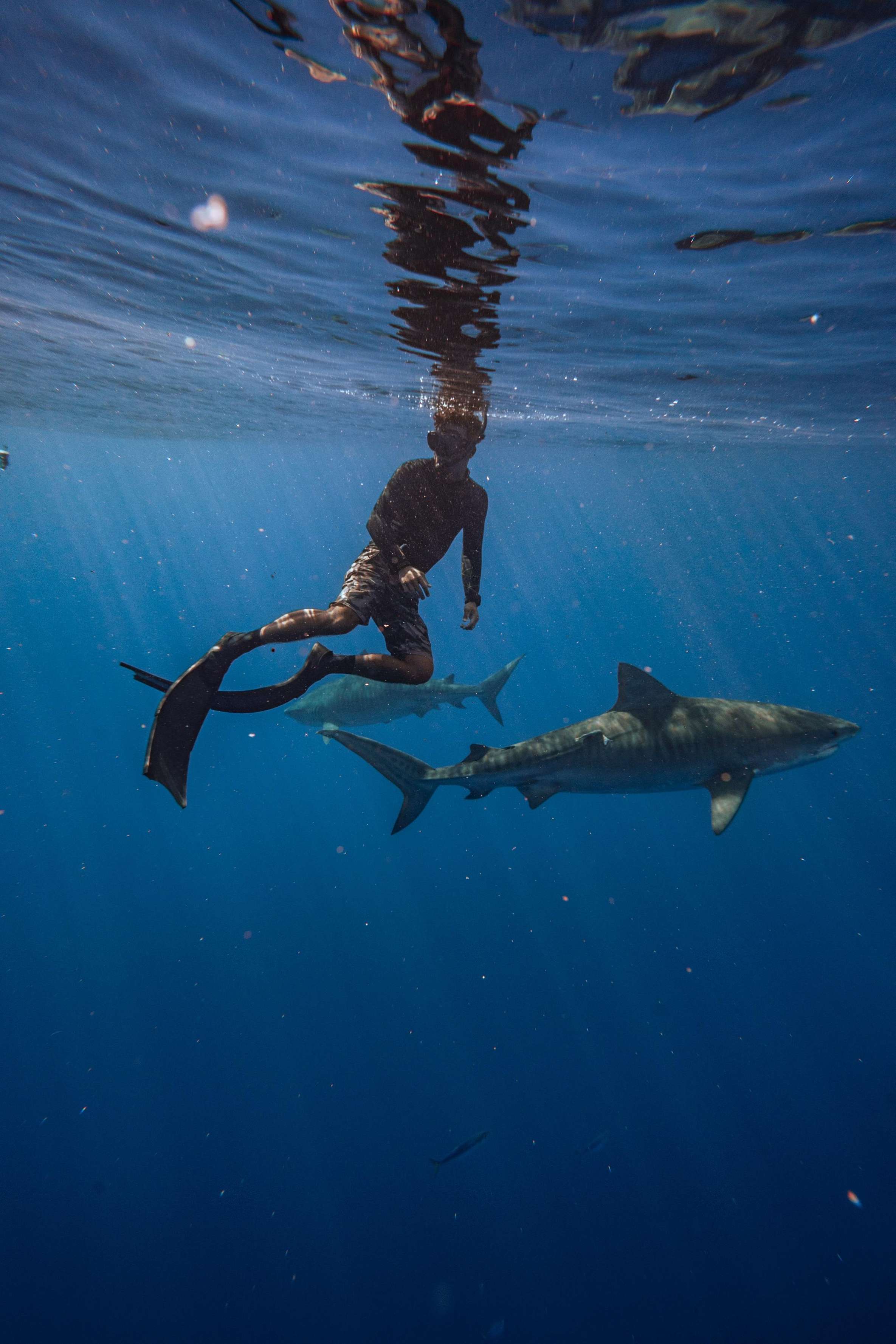
Swim with Galapagos and sandbar sharks in open blue water, no cage between you. Guided snorkel tours off Haleiwa with a safety diver at your side, small groups of six to eight, and no chum, just wild sharks on their own terms.
"Highly recommend this swim with sharks! Crew really knows their stuff, kept me safe and comfortable while it stayed exciting. Seeing sharks up close was incredible, everything ran smooth. Just go for it!"
4.9★average rating370traveler reviews100%free cancellation24countries travelers came from
Choosing your cageless shark diving in Oahu
Cageless shark diving in Oahu comes down to one choice: how close you want to be, and with whom in the water. All four tours leave Haleiwa or Honolulu by boat and put you in open ocean with a safety diver beside you. The differences are group size, what the crew includes, and how much of the trip is swimming versus riding.
SwimmingEvery cageless tour here requires you to know how to swim, and most recommend previous snorkel experience.
Age limitsSome cageless tours exclude children 4 and younger, others exclude 11 and younger, and one requires a minimum height of 4 feet 3 inches.
HealthCageless diving is not suitable for people with heart problems or prone to seasickness; if pregnant, consult a doctor first.
Boat rulesYou must be able to get in and out of the boat on your own, and touching marine life is not allowed.
Check-inOne charter requires check-in with the captain 30 minutes before departure, and late guests cannot be accommodated.
SeasonWinter swells from November through February bring rougher seas and more cancellations; May through September has the calmest water.
Getting thereThe drive from Waikiki takes 45 to 75 minutes, so budget 1.5 to 2 hours to arrive 30 to 45 minutes early.
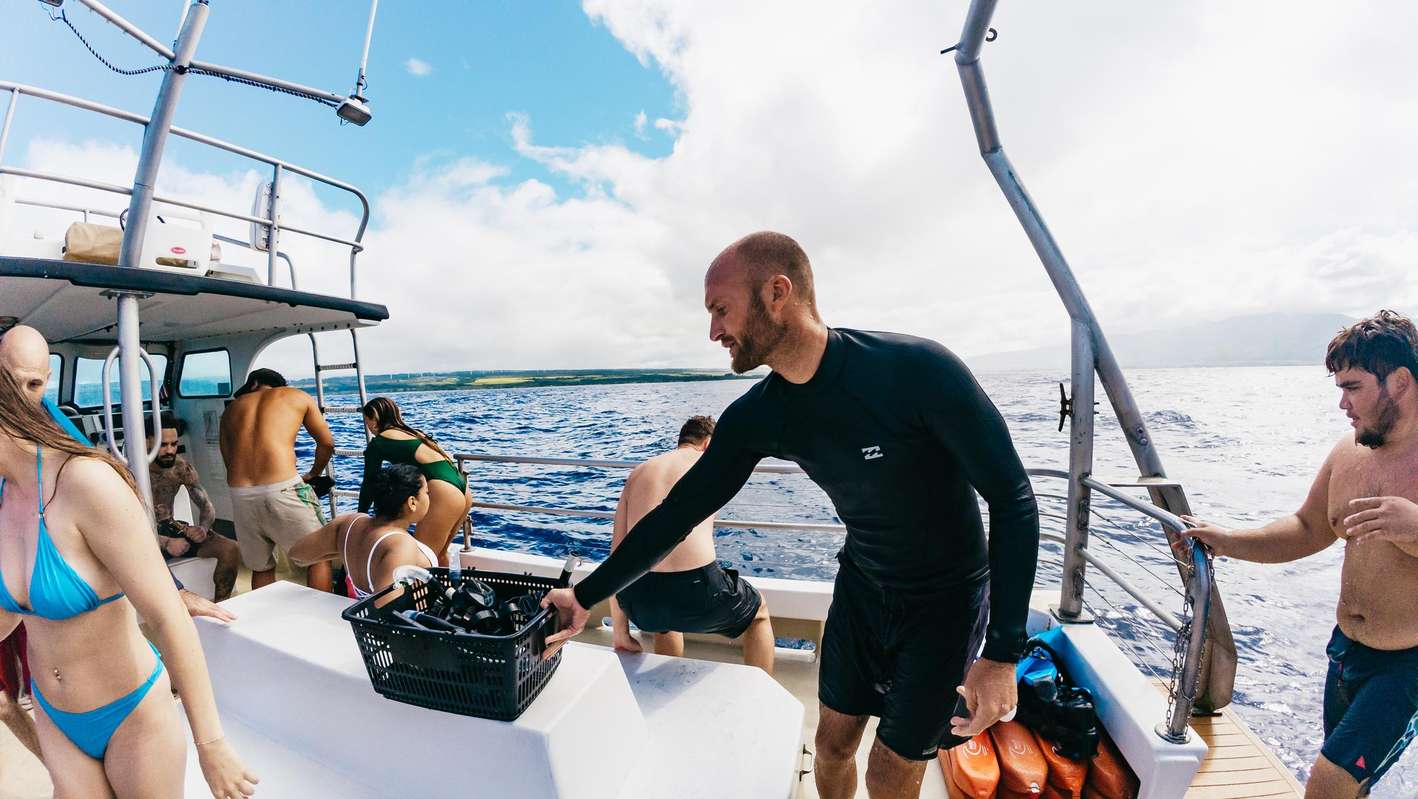
What to bringBring your own swimwear and towel, plus sun protection; masks and snorkels are provided on board.
CamerasGoPros and personal cameras are allowed on most cageless tours, and one offers professional photos for purchase on board.
CancellationIf weather cancels the trip, you choose between rescheduling or a full refund.
accessEvery cageless shark dive in Oahu requires real swimming ability, and the tours are not open to non-swimmers, young children, or people with heart problems.
Read each tour's limits before you book: several require strong open-ocean swimming and previous snorkeling experience, one excludes children ages 11 and younger, and another sets a minimum height of 4 feet 3 inches (130 cm). If you are pregnant or have health concerns, ask your doctor first.
Three ways to go diving with sharks, no cage, in Oahu
Most popular cageless trip
2 hours·English
4.9(195)
Oahu: North Shore Cageless Shark Snorkeling Tour
The original North Shore cageless snorkel, rated 4.9 by 195 travelers, with a safety diver beside you the whole swim.
What a cageless shark diving day off Oahu looks like
2 stopsabout 2 h3 places
The first thing you see is blue: open water roughly three miles off Haleiwa, with visibility that can reach 150 feet and the sea floor 250 to 300 feet below.
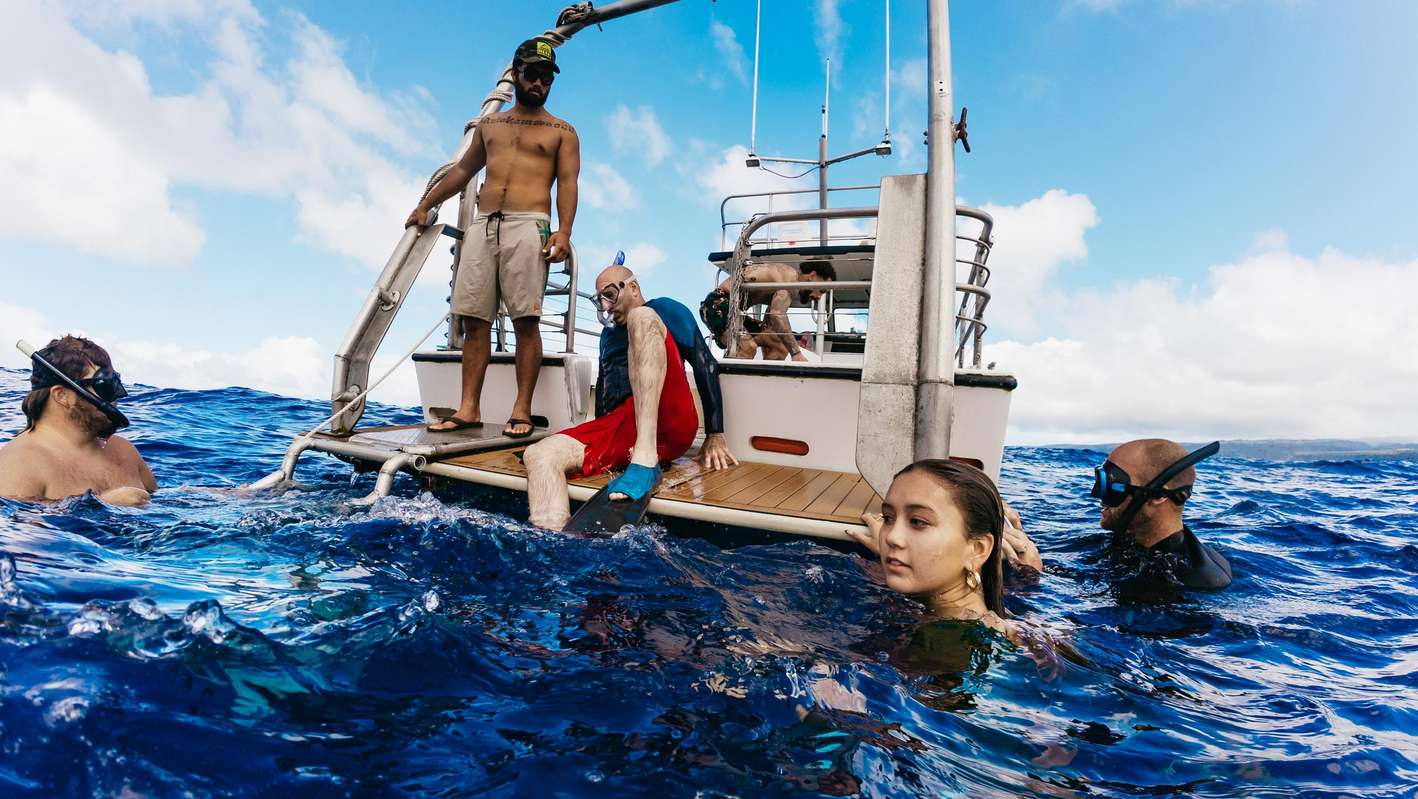
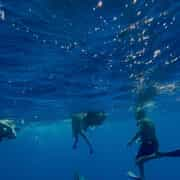
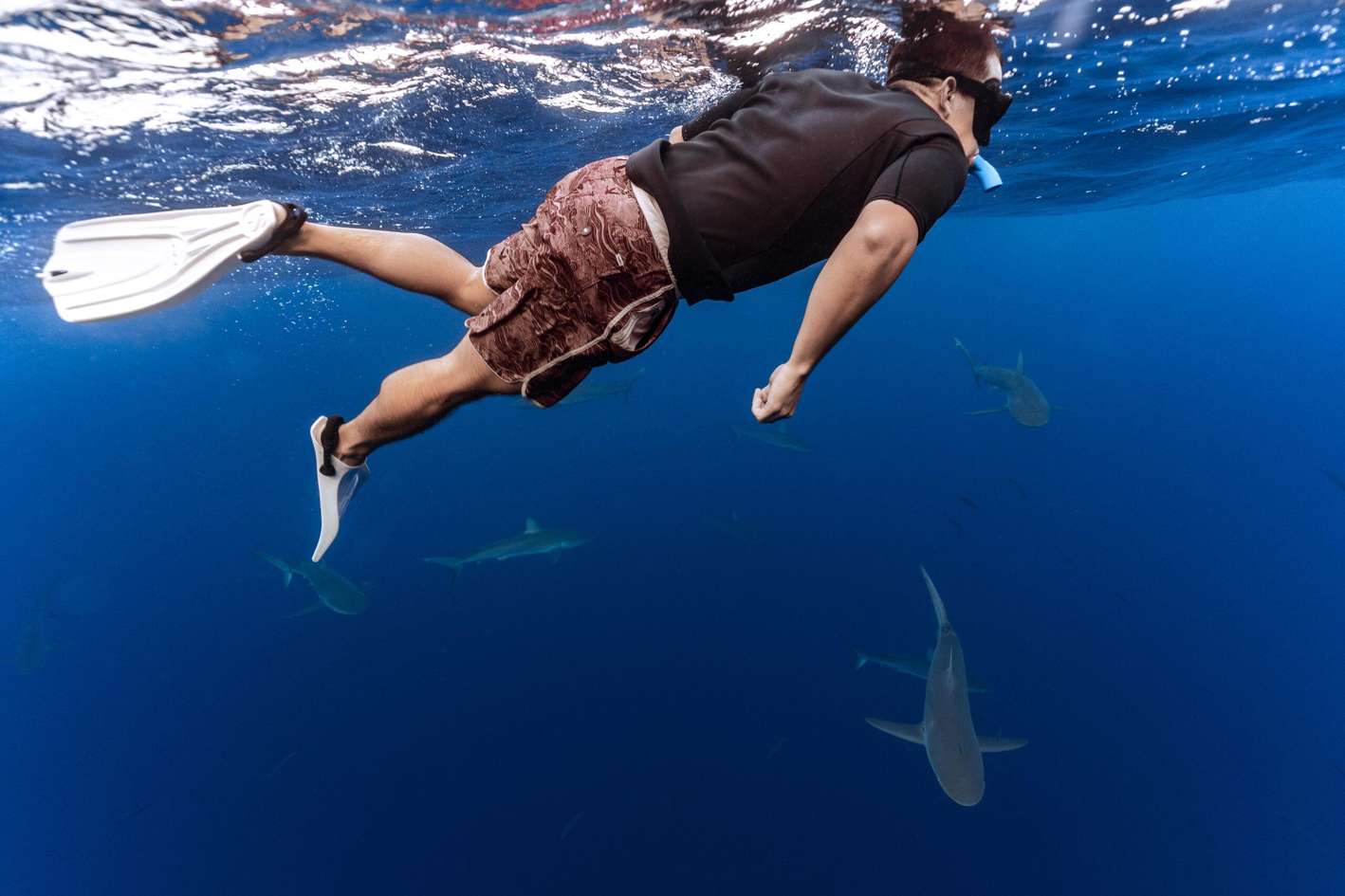
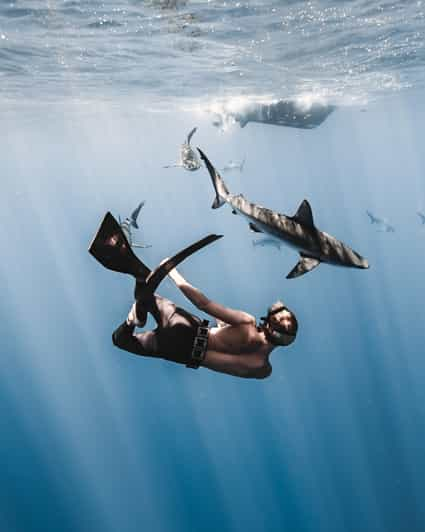
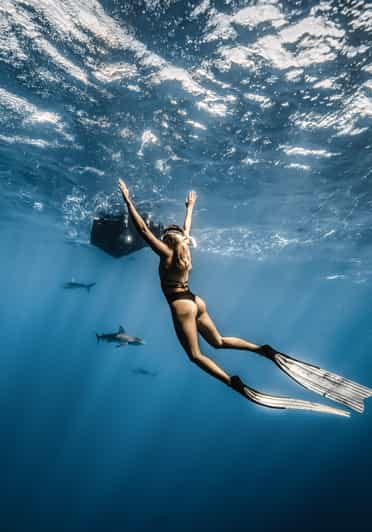
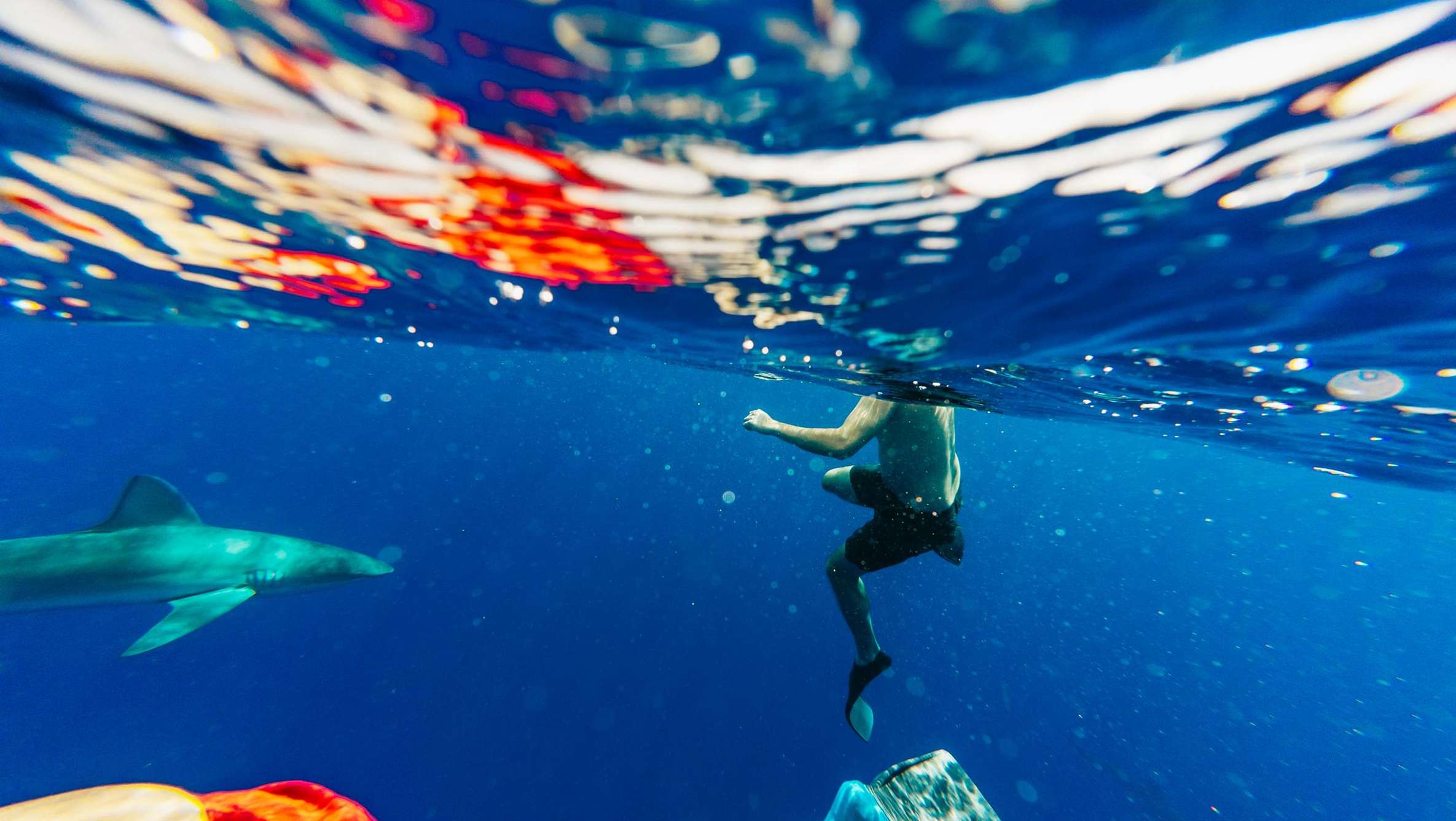
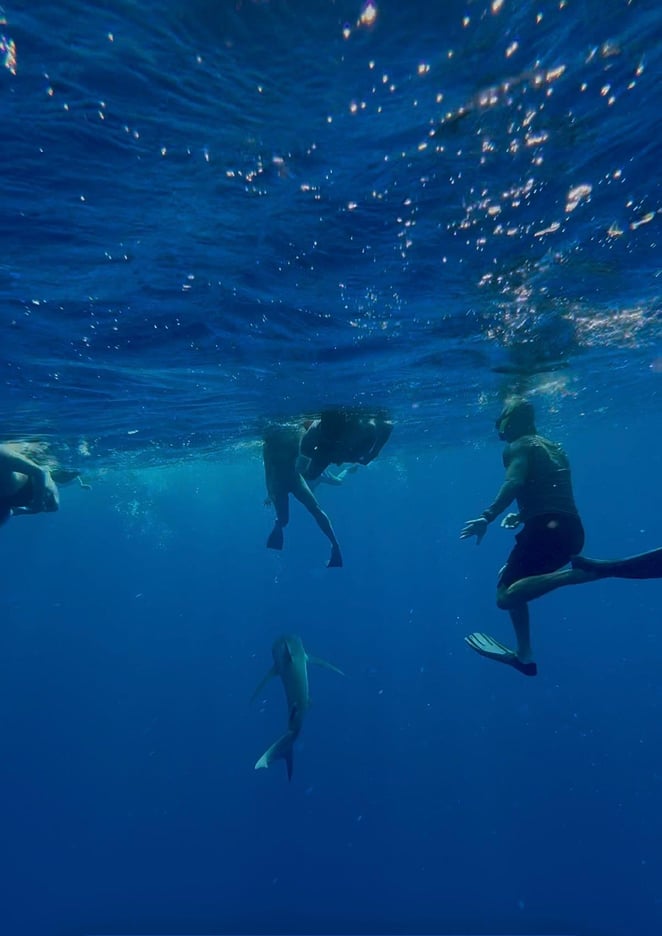
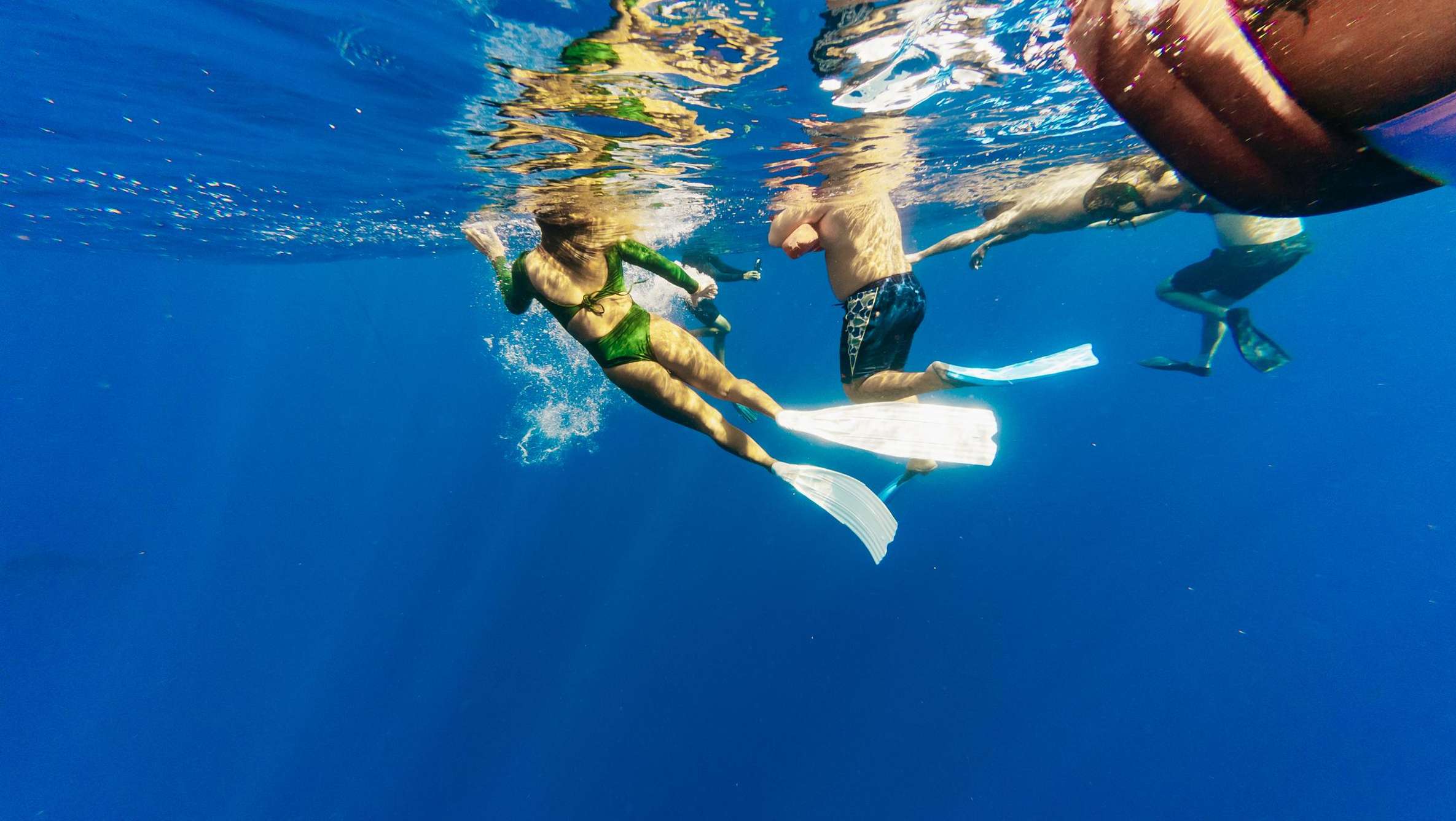
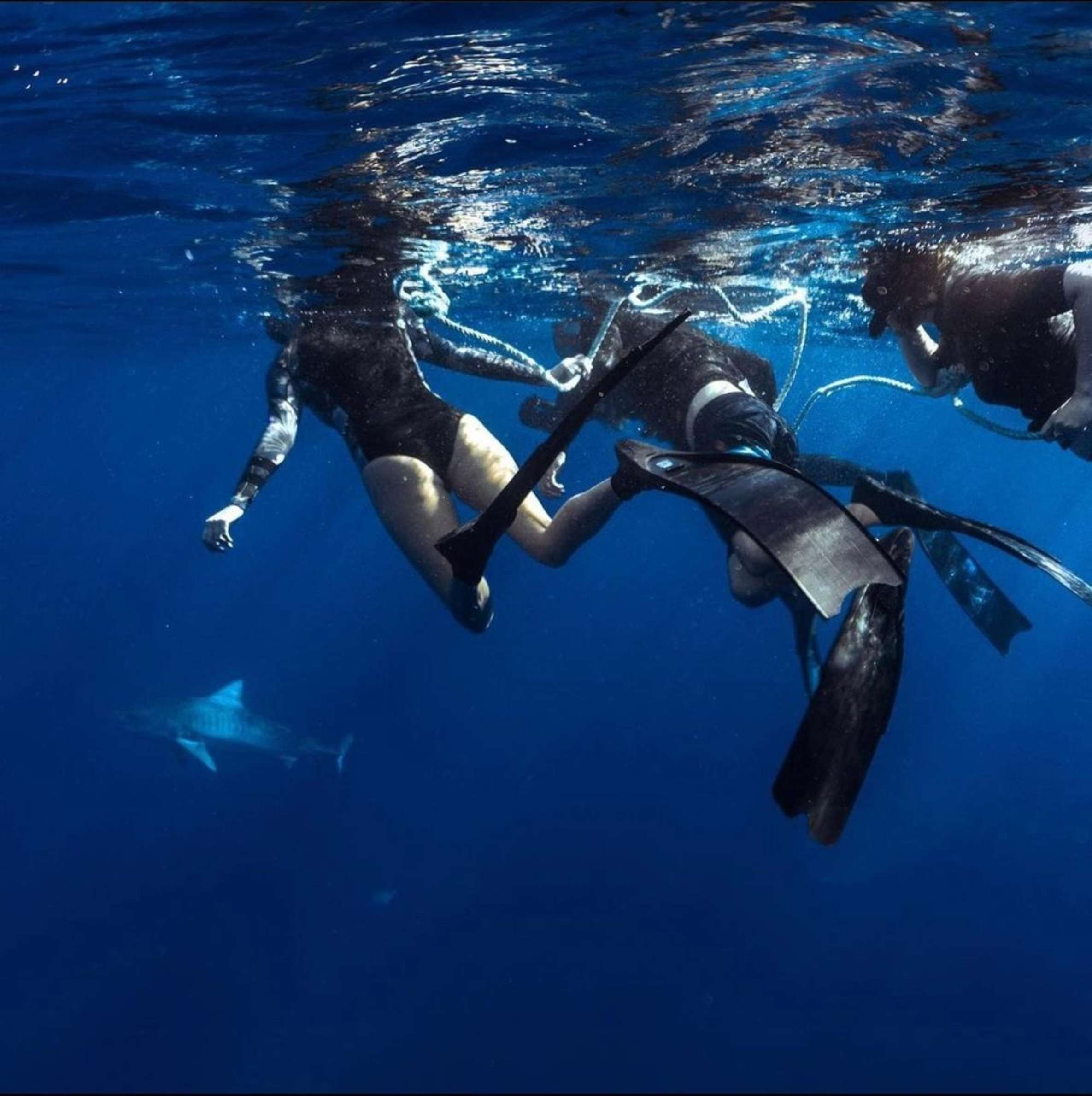
Mask and fins on, you slip in beside a trained safety diver and float at the surface while Galapagos and sandbar sharks circle past, drawn by the boat's engine sound rather than bait, which Hawaii law forbids anyway.
Most tours run about two hours, with 30 to 60 of those minutes actually in the water and a 15- to 25-minute boat ride each way. Groups stay small, six to eight swimmers per safety diver, and the same waters bring turtles, barracuda, tuna, mahi-mahi and dolphins year-round.
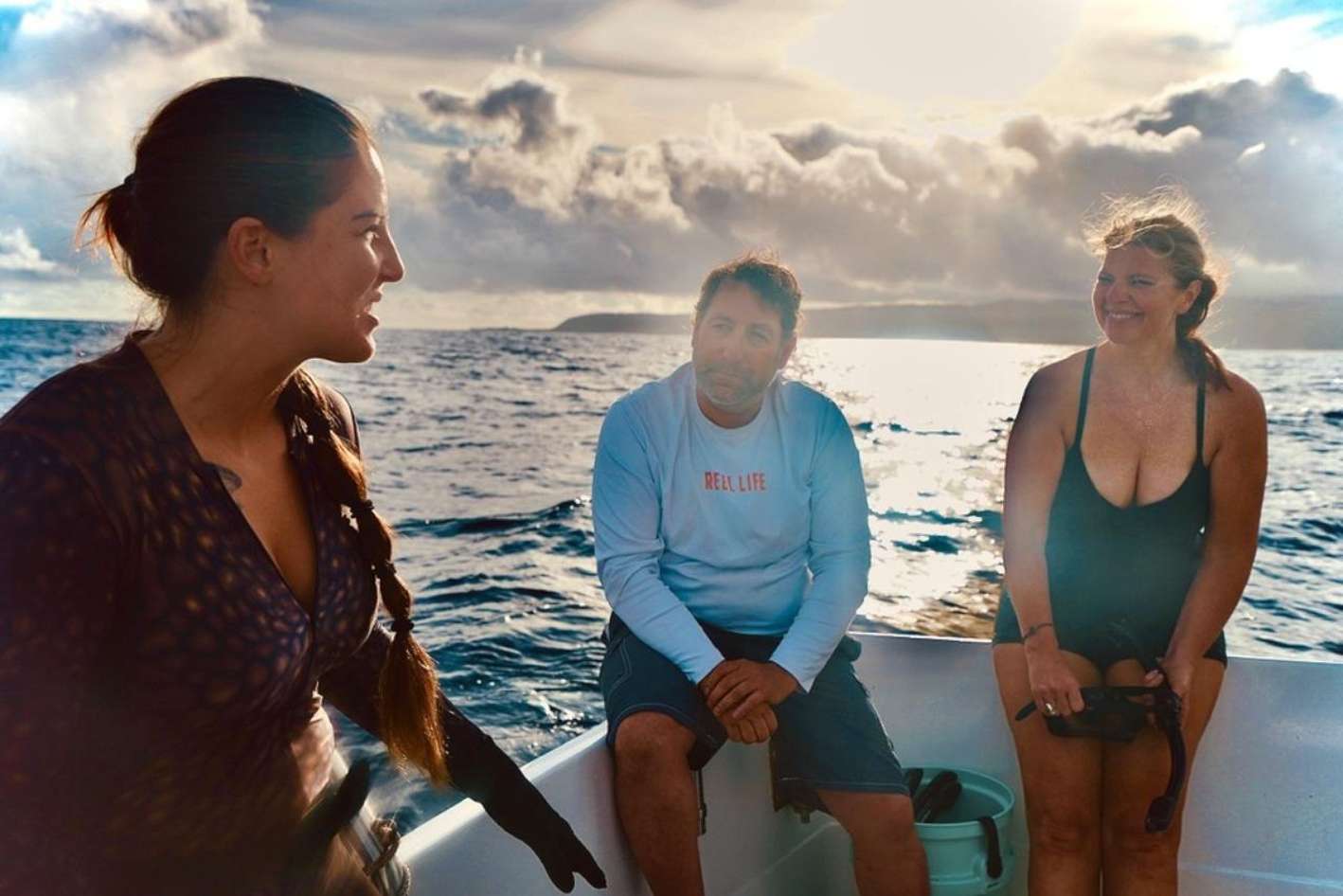
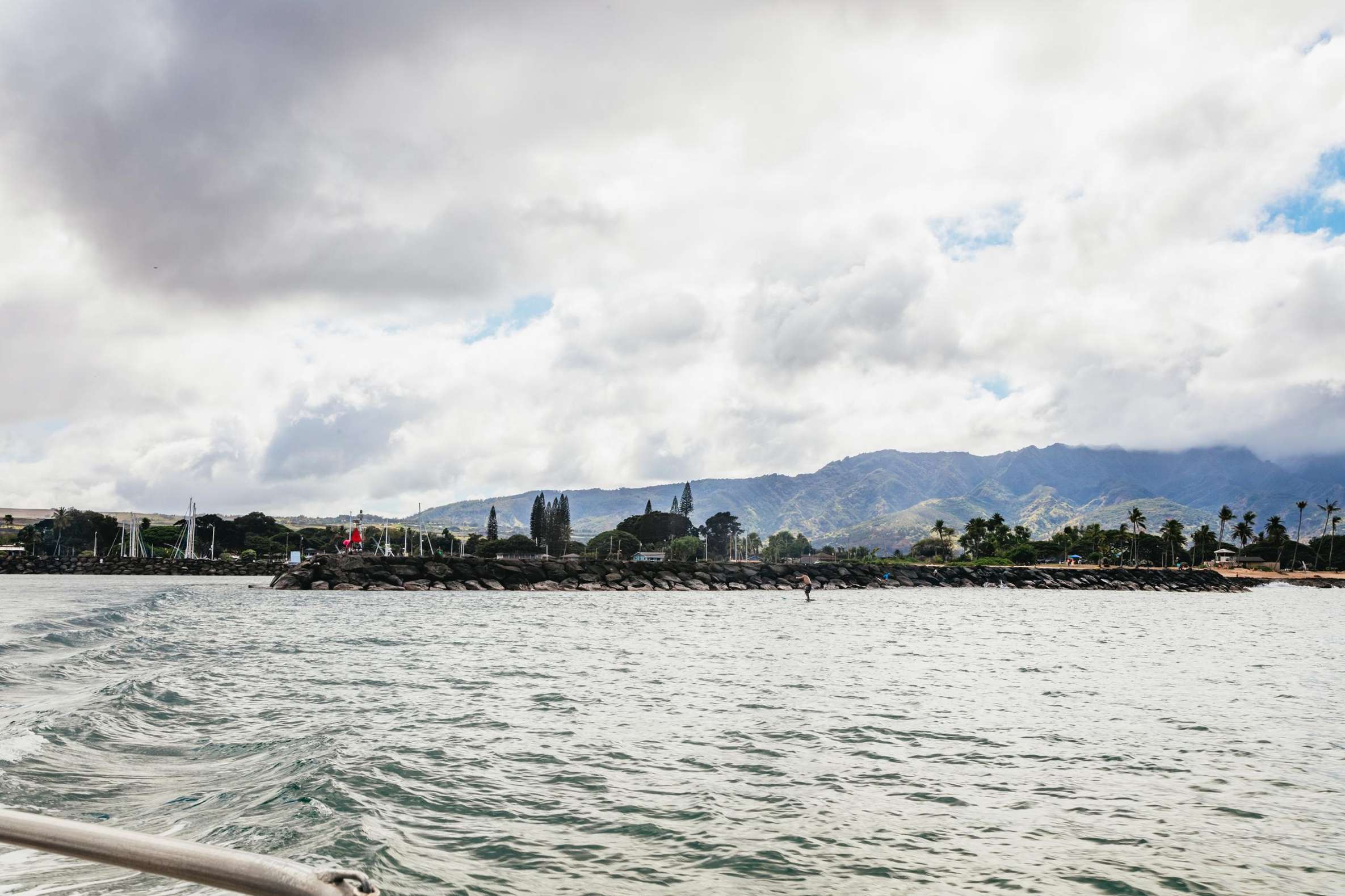
Meeting pointIsland View HawaiiOne tour operator meets you at the Haleiwa Small Boat Harbor; arrive 30 minutes before departure to check in with the captain and hear the safety briefing.2Haleiwa· 120 minAbout three miles offshore, over a sea floor 250 to 300 feet deep, you snorkel without a cage alongside Galapagos and sandbar sharks with a safety diver beside you.
Included
Snorkel gearPhoto and videos
Not included
Hotel pickup and drop-offTips
Cageless shark diving in Oahu - tour comparison
Green marks the lowest price. Prices per person.
Tour
Price
Duration
Best for
Our pick
Oahu: North Shore Cageless Shark Snorkeling Tour
4.9★ (195)
from $167per person
2 hours
snorkelers who want the North Shore classic with a safety diver and small group of 8
Most reviewers felt safe in the water the whole time, with calm guides watching over every swimmer.
Best surprise
Many arrived nervous and found the fear faded fast next to calm sharks and funny, supportive guides.
Most common wish
A few wanted more time in the water, and some mornings brought only two sharks instead of a crowd.
How to book your cageless shark diving tour in Oahu
01
Pick your date and boat time
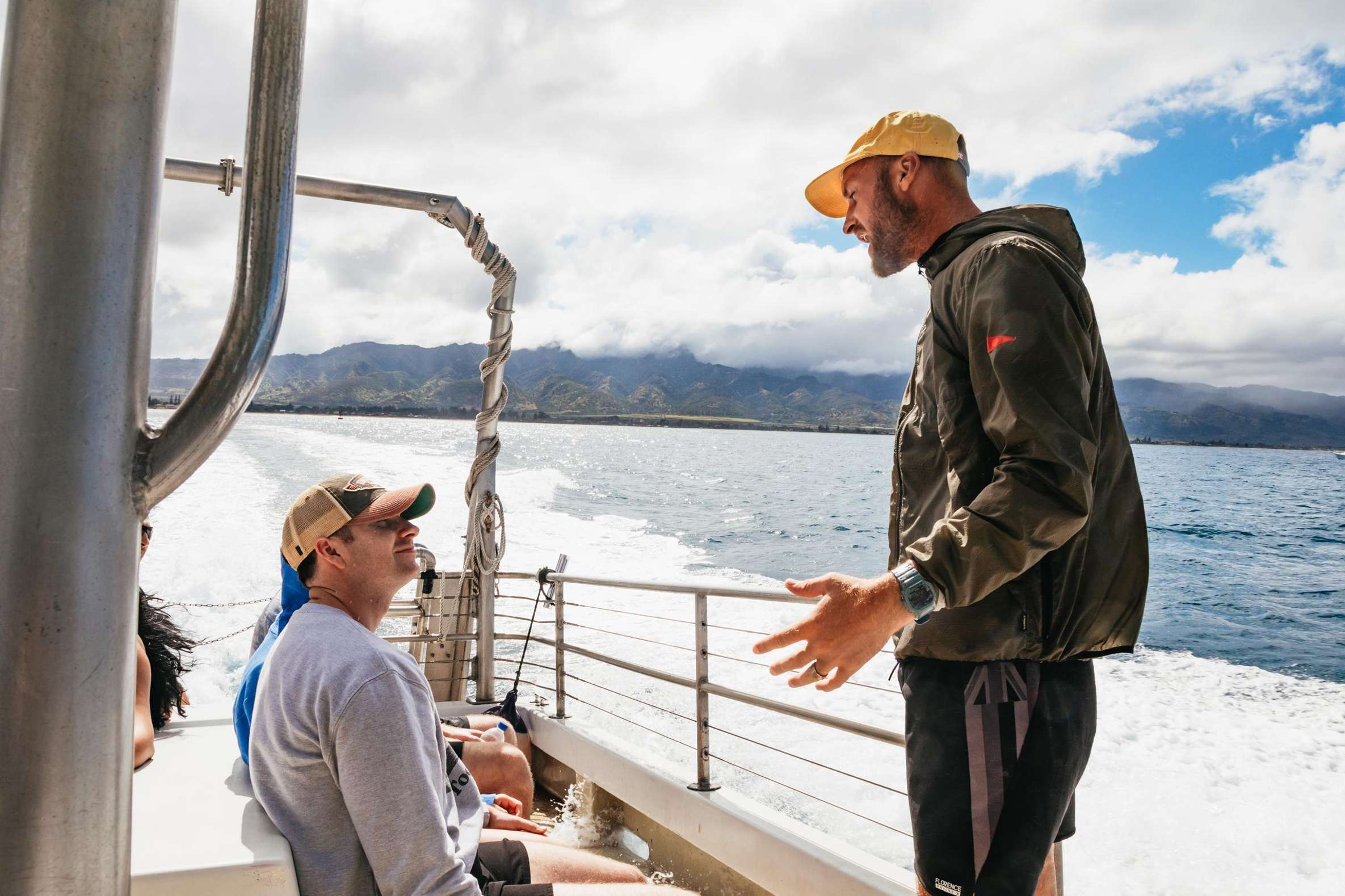
Choose a morning slot if you can. The first boats leave between 6 am and 7 am, and that is when Oahu's trade winds are still light and the water off Haleiwa is at its clearest.
Pro tipWinter swells from November to March can shut tours for days at a time, so hold a second date in reserve if you are visiting in those months
RecommendedBook the earliest departure available; the sea builds chop through the late morning and afternoon
02
Choose your option
Most cageless tours list two ways to join: the in-water swim with a safety diver, or a ride-along seat where you stay on the boat and watch sharks from the deck. Pick the swim only if you snorkel comfortably in open ocean.
Pro tipA ride-along seat keeps a nervous friend or partner in the day; they still see sharks at the surface from the boat
Common mistakeBooking the in-water option for someone who has never snorkeled; cageless tours are not suitable for non-swimmers
03
Pay and read the confirmation
After payment, the voucher and the operator's messages arrive by email. Check the meeting point and check-in time straight away, because one operator requires you at the boat 30 minutes before departure and late arrivals cannot be accommodated.
Common mistakeSkimming past the check-in time; each charter runs on a strict schedule and will not wait
04
Plan the drive to Haleiwa
From Waikiki, take Interstate H-1 West to H-2 North, then Kamehameha Highway into Haleiwa. The run covers about 35 miles and takes 45 to 75 minutes, so leave 1.5 to 2 hours of buffer to park and check in.
Pro tipParking at Haleiwa Small Boat Harbor is free and roomy, so no need to arrive hunting for a meter
RecommendedRemove footwear before boarding; slip-on sandals left in the dockside bins are the standard move
05
Get ready the day before
Pack a swimsuit, towel, reef-safe sunscreen and a dry bag for the open deck. Take motion sickness medication the night before and again that morning, then cancel free of charge up to 24 hours ahead if plans change.
ImportantAll cancellation terms live on the booking page; confirm the 24-hour cut-off matches your tour before you commit
RecommendedBring sunglasses with a strap and a light windbreaker for the 15- to 20-minute ride back through the spray
What to know before you book a cageless shark dive in Oahu
Can stop the dayGood to knowGood news
01
ChoosingWhat it is, who it suits, when to go
6
Swimming abilityCan stop the day
You need to know how to swim, and previous snorkeling experience is highly recommended on most of these trips. Strong ocean swimming comfort matters because there is no bottom to stand on and no cage rail to hold.
Water time
A two-hour tour does not mean two hours with sharks. Expect 30 to 60 minutes actually snorkeling, with the rest taken up by a 15- to 25-minute boat ride each way, briefings and gear setup.
Group size
In-water groups stay small: one safety diver for every six guests is the standard, with some operators going up to eight. Boats themselves run from six to twelve guests total, so the crew keeps close watch on everyone in the water.
Water rules
Stay calm in the water: no erratic splashing, thrashing or sudden movements, and never touch marine life. The pre-dive briefing covers slow kicks, calm posture and exit signals, and safety divers redirect guests gently when needed.
Motion sickness
Floating in open swells can turn stomachs, so take motion sickness medication the night before and again that morning. Once it starts on the water, oral medication no longer works.
Timing
Trade winds build through the morning, adding chop and cutting visibility, so the earliest boats between 6 am and 9 am get the calmest seas and the clearest water. A first-departure slot rewards you on every level.
02
BookingHow far ahead, and what happens if plans change
1
Cancellation
Cancel up to 24 hours in advance for a full refund on every tour here. If weather or swells force the operator to cancel, you choose between rescheduling another date or getting your money back.
03
Before you goPapers, health, what to bring
3
Health limitsCan stop the day
Cageless tours are not suitable for non-swimmers or people with heart problems, and seasickness-prone guests tend to struggle offshore. If you are pregnant or have health concerns, ask your doctor before going out on the open ocean.
Age limits
Minimum ages vary by tour operator: some cageless trips exclude children aged 11 and under, others age 4 and under, and one tour sets a height minimum of 4 feet 3 inches. Check the age rule for the specific tour before booking for a child.
What's included
Masks, fins and snorkel gear come with every tour, and one operator adds a wetsuit top. Bring your own swimsuit, towel and sunscreen; hotel transport, food and tips are usually not included.
04
On the dayWhere to be, when, and how you get there
1
Meeting point
All four tours leave from Haleiwa, and most depart from the small boat harbor there. One tour requires check-in with the captain 30 minutes before departure, and late guests cannot be accommodated on a strict charter schedule.
05
During the tourWhat is expected of you
1
Cameras
GoPros and personal cameras are welcome on most cageless tours, though one operator asks guests to attach them to a stick and another skips underwater cameras entirely. Several crews sell professional photo and video packages if you would rather leave the camera on the boat.
Cageless shark diving in Oahu - the open-water guide
The sharks are already there, three miles off Haleiwa, curious about boat engines and unbothered by a calm swimmer. The real questions are whether your ocean swimming holds up and which morning you take.
Haleiwa· 21.59° N, 158.11° W
If you only remember three things
1
Take the first boat out: 6 am departures get the calmest seas and up to 150 feet of visibility.
2
Float calmly and hold the safety rope if you need to; 1 safety diver watches every 6 swimmers.
3
In a two-hour trip, expect 30 to 60 minutes actually in the water with the sharks.
Is Oahu cageless shark diving worth it, or stay in the cage?
A metal cage has a job, and it does it well. It reassures the swimmer who wants a bar between their face and a shark, asks nothing of your swim strength beyond holding a handrail, and still gets each guest about 20 minutes of water time as groups rotate through in shifts.
That security carries a price. Cage runs mean bruises and stray kicks from strangers in chop, bars in every photo, and a queue waiting its turn. People who have done both formats on the North Shore tend to say the same thing: once they floated free, the cage felt like watching through a window.
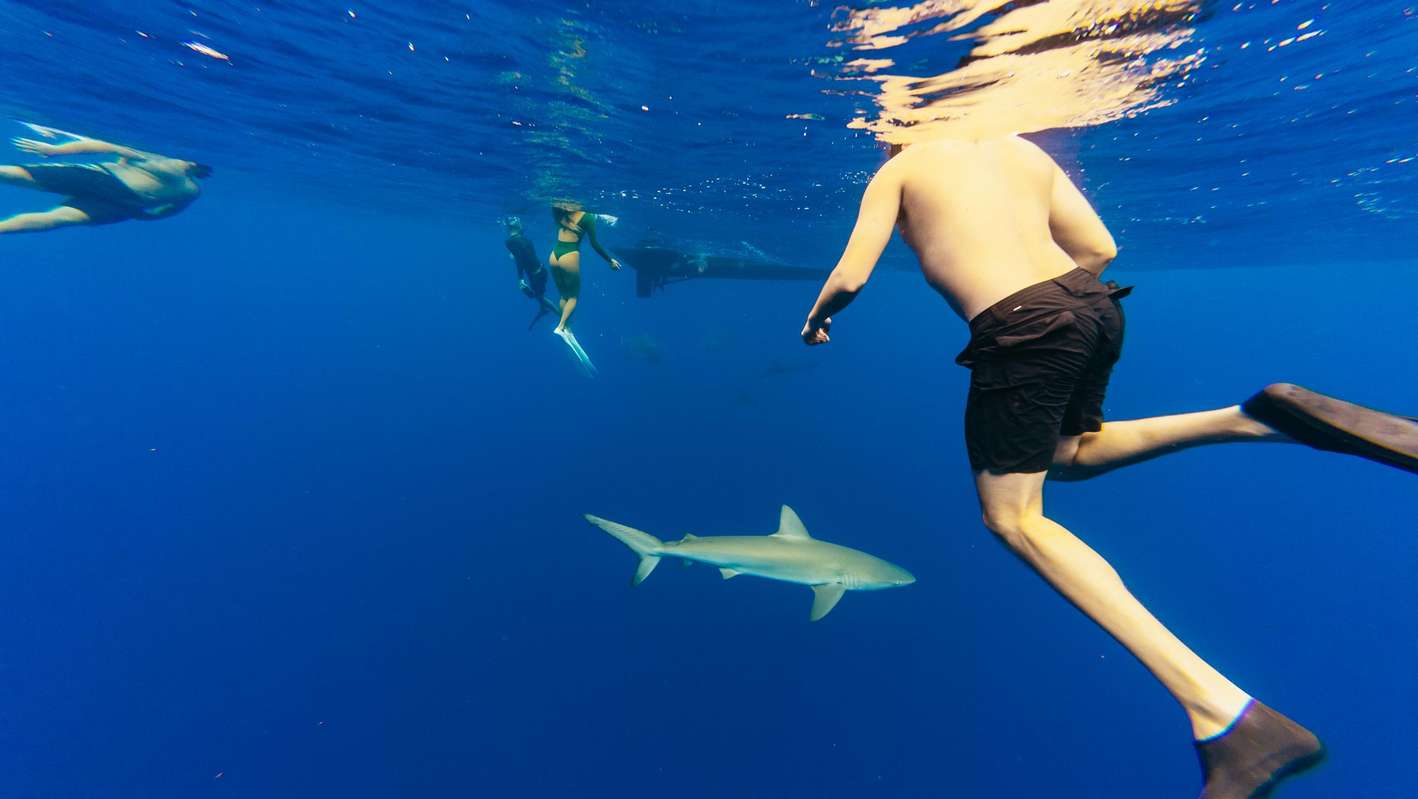
Cageless shark diving in Oahu trades the bars for a requirement: strong, comfortable ocean swimming. Given that, the reward is a full silhouette of a shark against open blue, unobstructed photos, and 30 to 60 minutes in the water instead of 20.
Cage diving versus cageless open-water snorkeling
Metal cage around you, boat at your back
None, you float free at the surface
Swimming ability
None beyond comfort in water
Strong ocean swimming essential
Water time per guest
About 20 minutes in rotating shifts
30 to 60 minutes with the group
Photos
Cage bars often end up in the frame
Clean wide-angle blue-water shots
Suits best
Nervous swimmers and anxious kids
Confident snorkelers
Metal cage around you, boat at your back
Swimming ability
None beyond comfort in water
Water time per guest
About 20 minutes in rotating shifts
Photos
Cage bars often end up in the frame
Suits best
Nervous swimmers and anxious kids
None, you float free at the surface
Swimming ability
Strong ocean swimming essential
Water time per guest
30 to 60 minutes with the group
Photos
Clean wide-angle blue-water shots
Suits best
Confident snorkelers
Neither format wins on its own. A first-timer who freezes in deep water has a better morning in the cage, while a confident swimmer will find the cage a waste of that confidence.
What it feels like to float in open water with sharks in Oahu
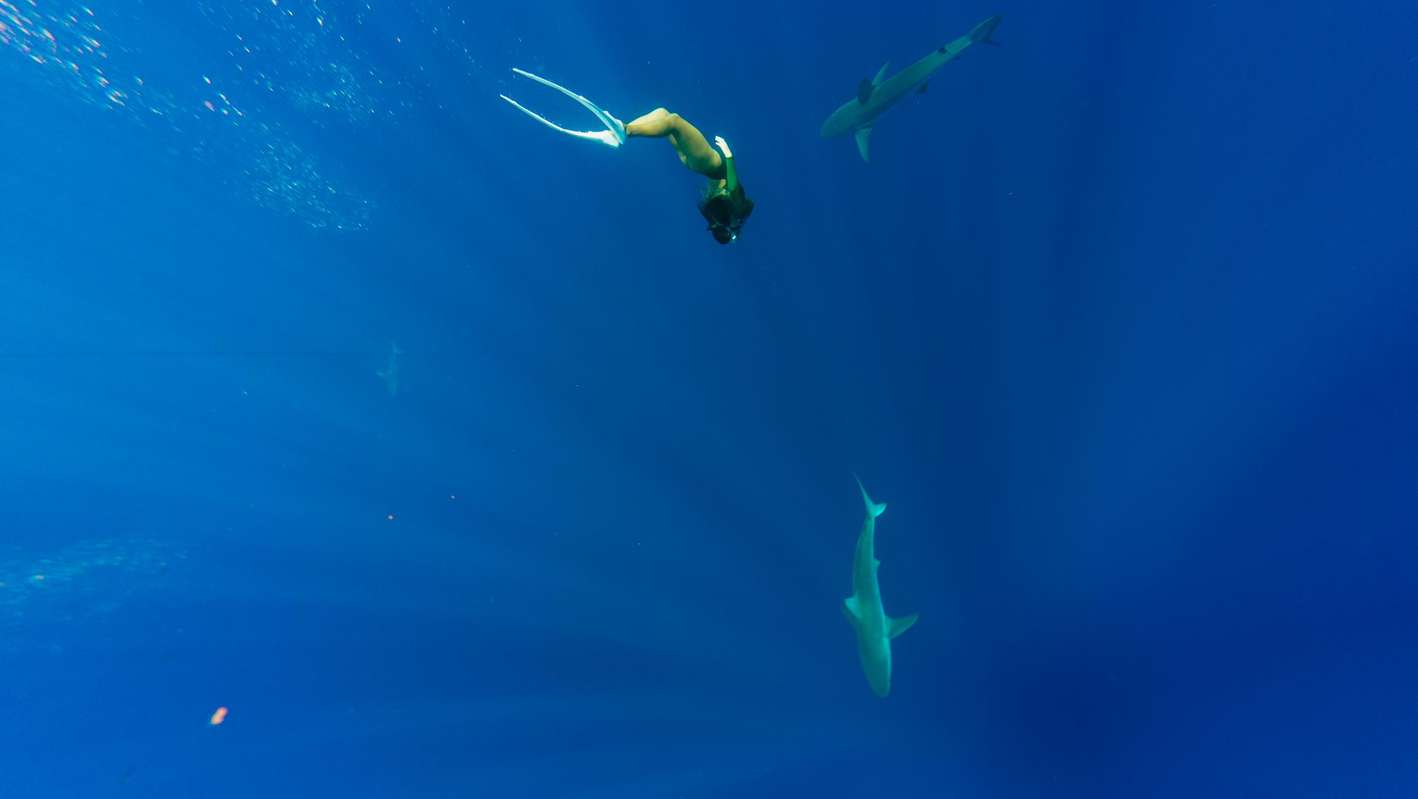
Three miles out of Haleiwa, the seafloor drops away. The water column over the drop-off runs from 150 feet down to more than 600, with the seafloor itself sitting around 250 to 300 feet below, and visibility often clears to 150 feet through open blue.
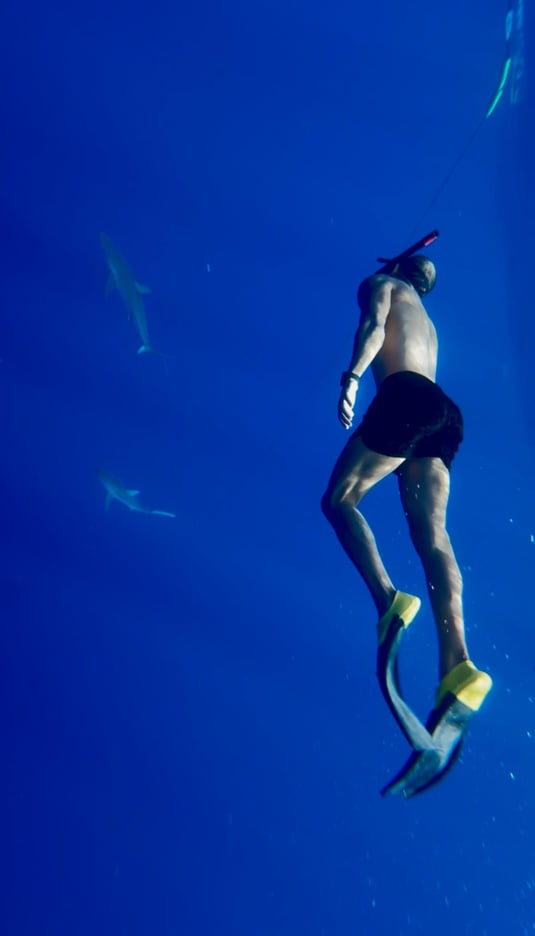
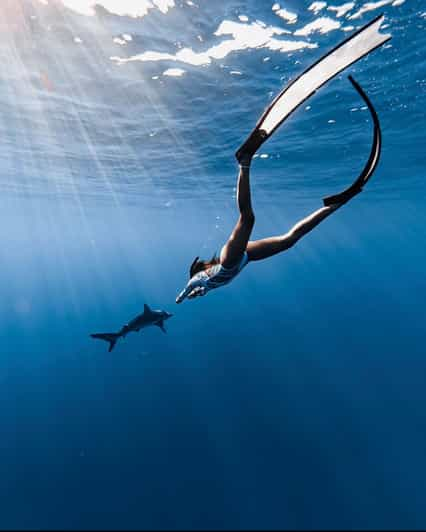
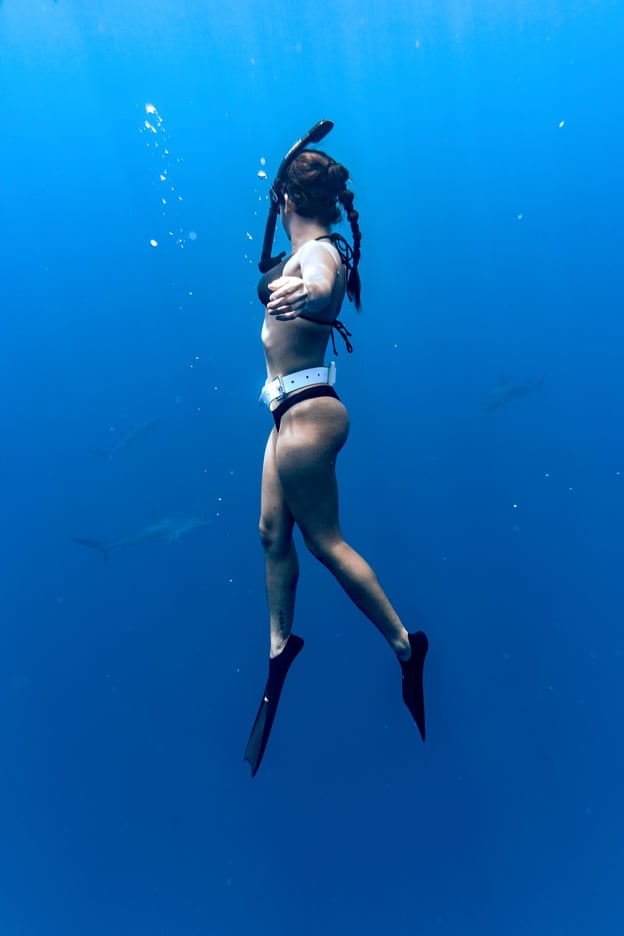
Wearing only a mask and snorkel, you step off the swim step into blue with no edges.
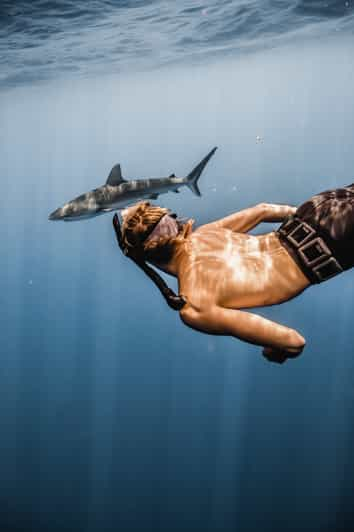
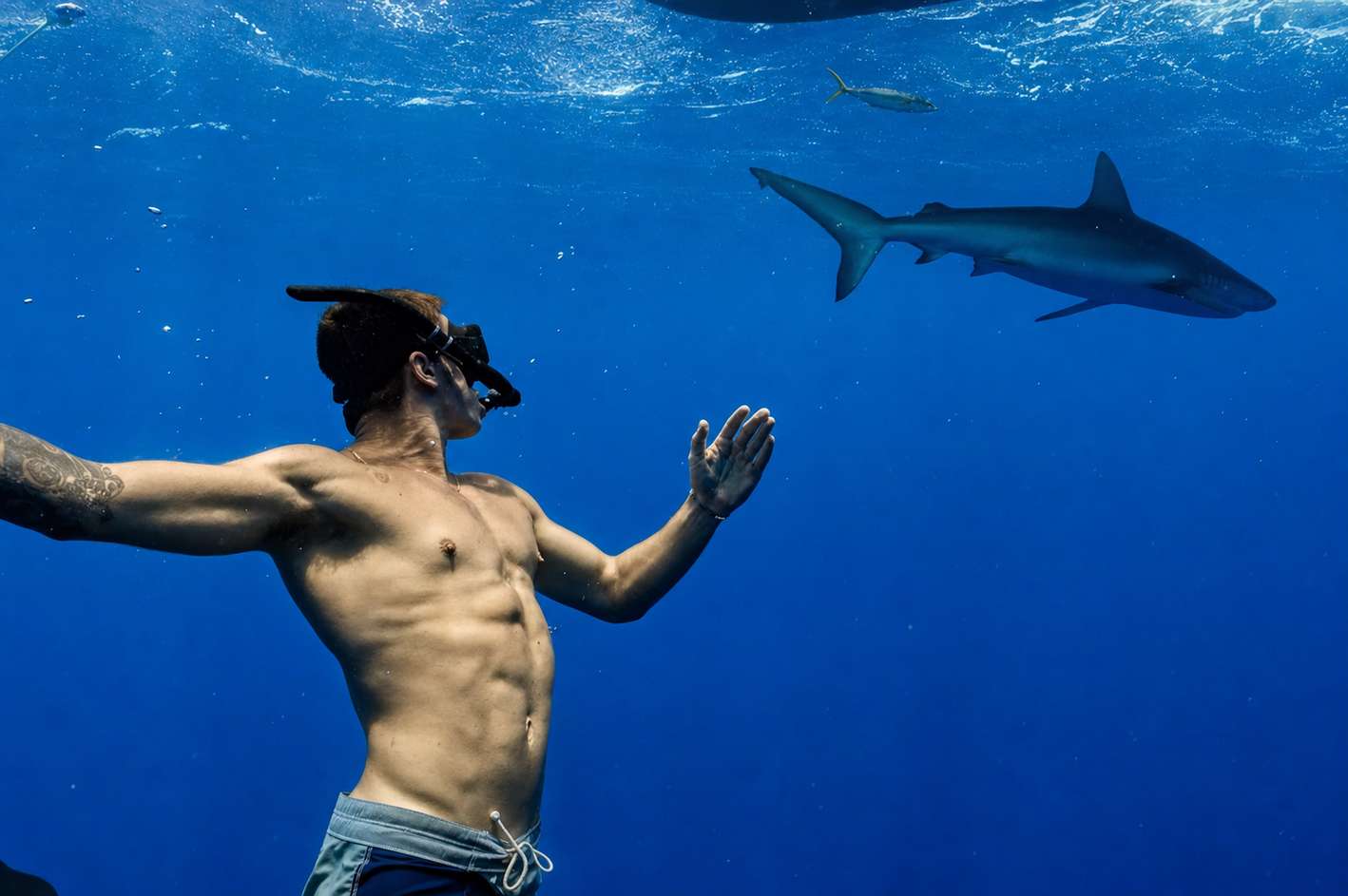
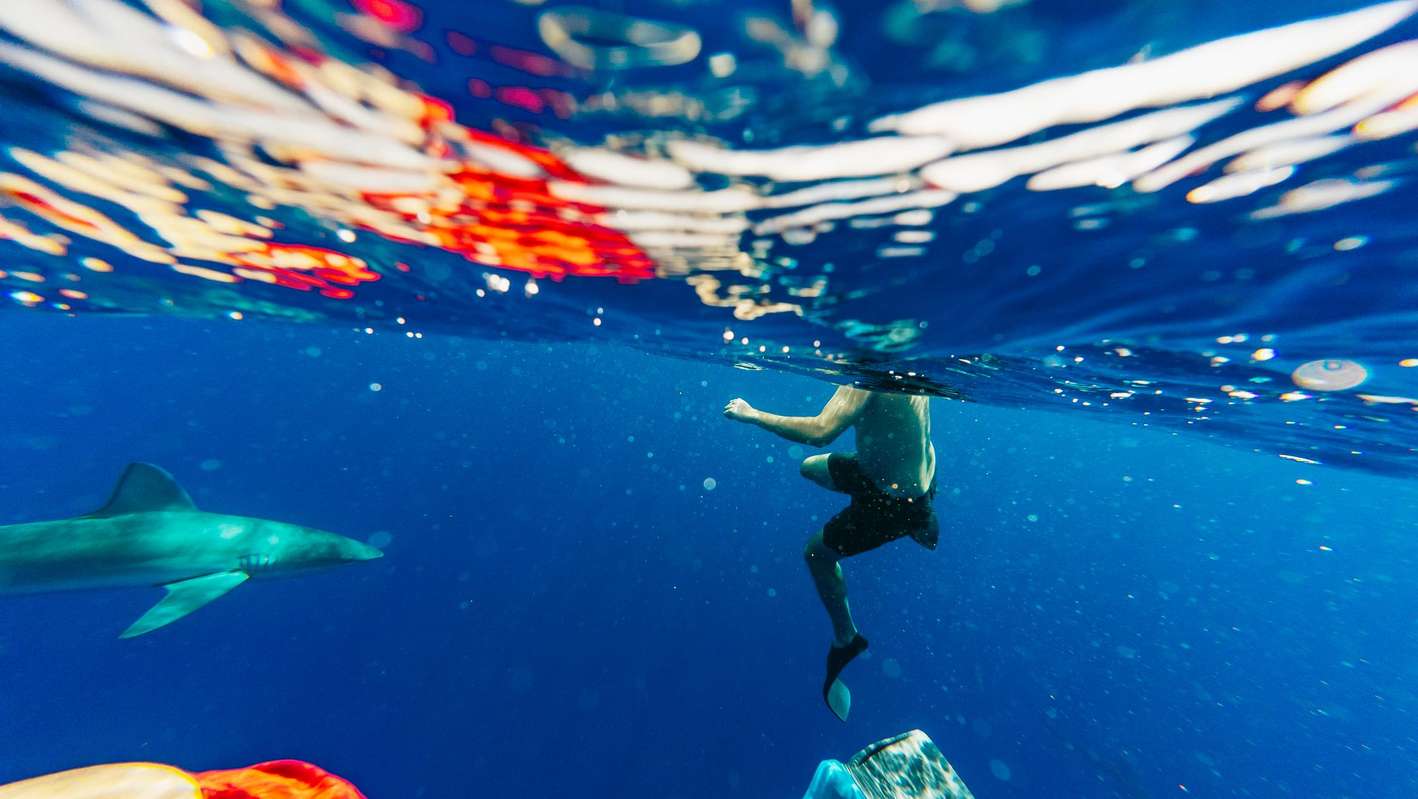
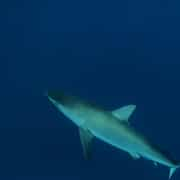
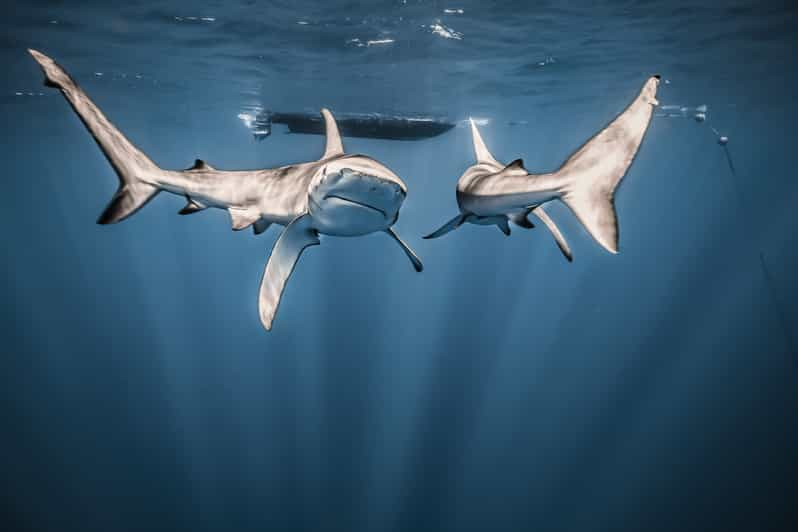
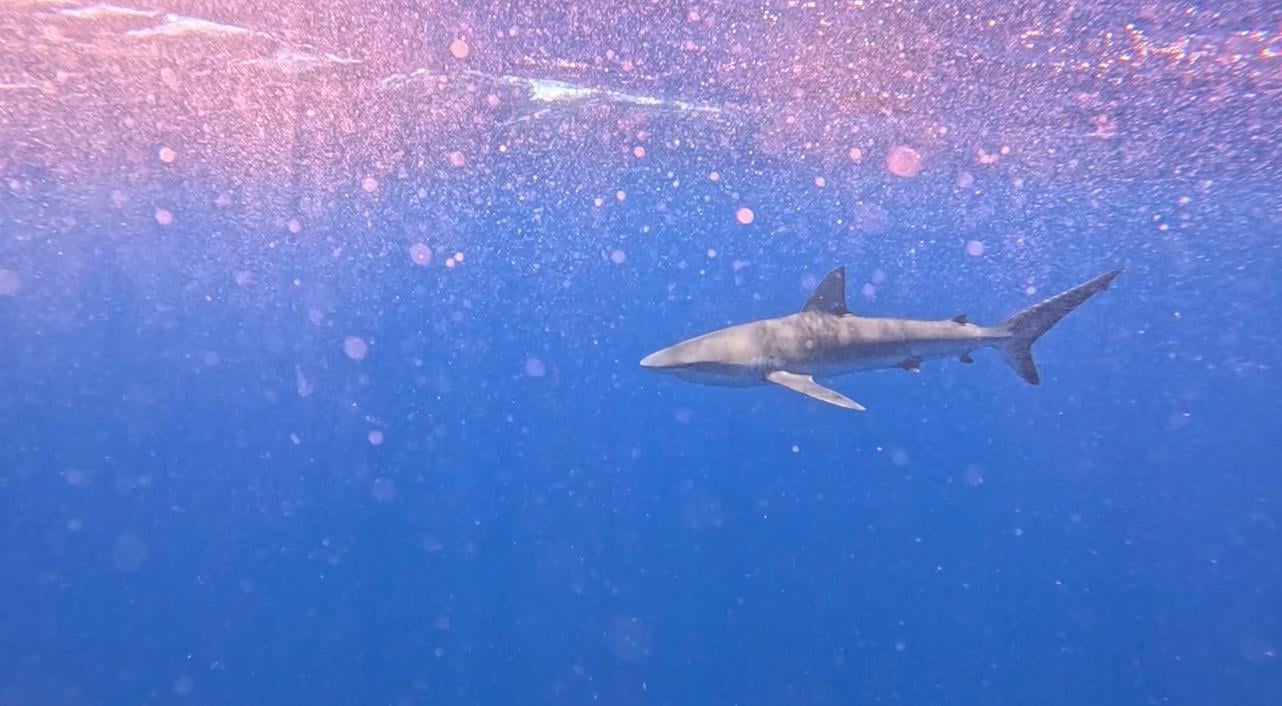
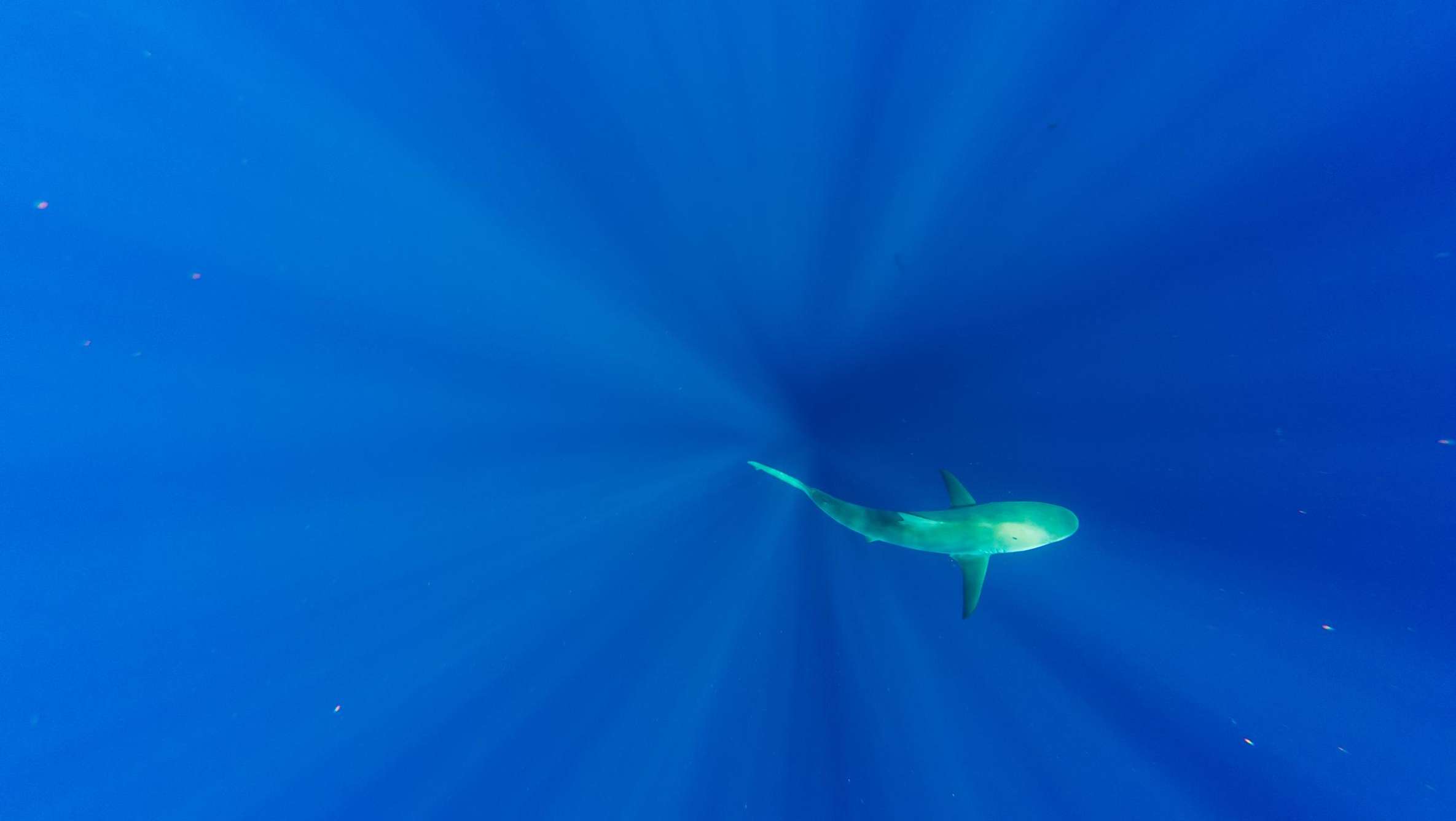
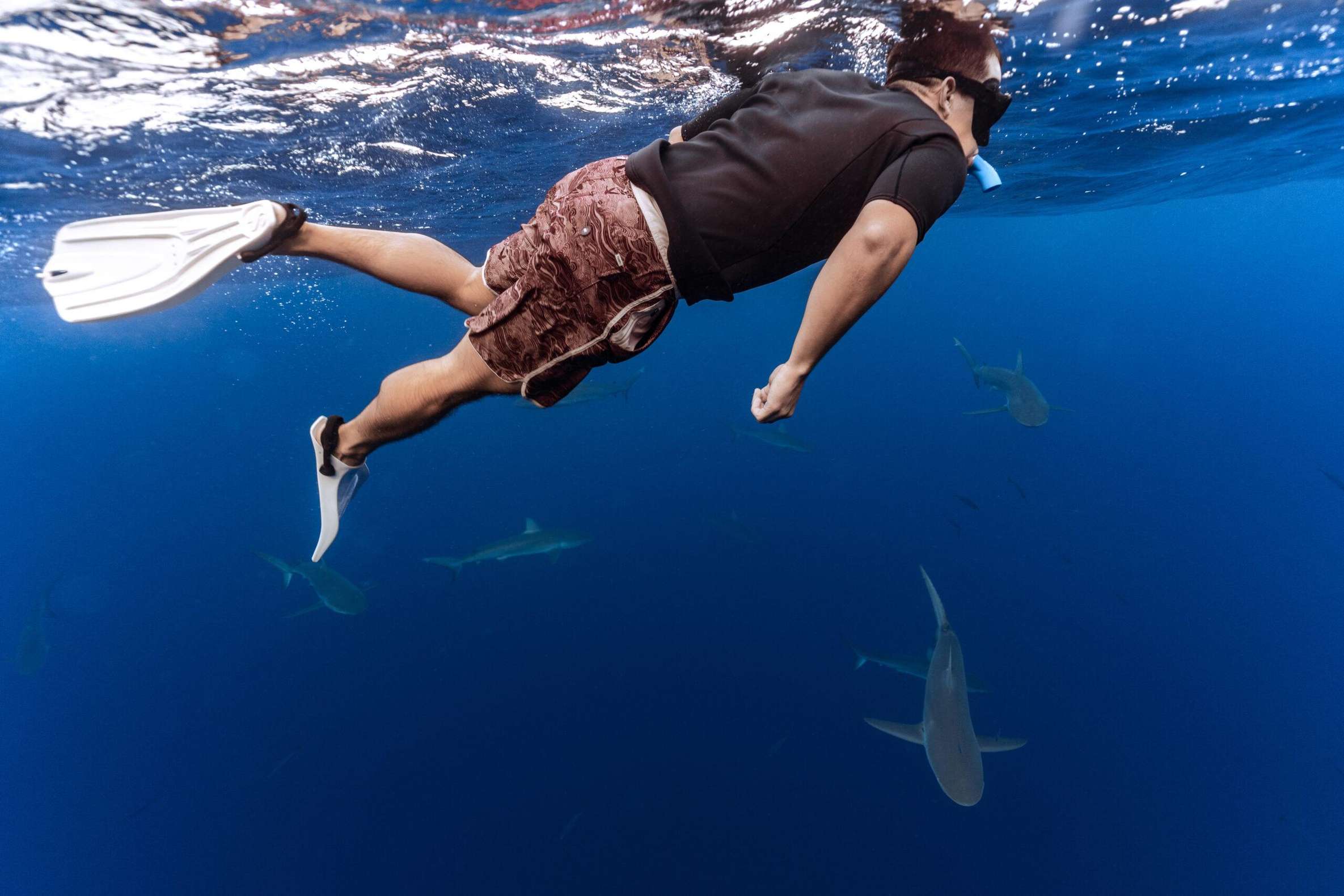
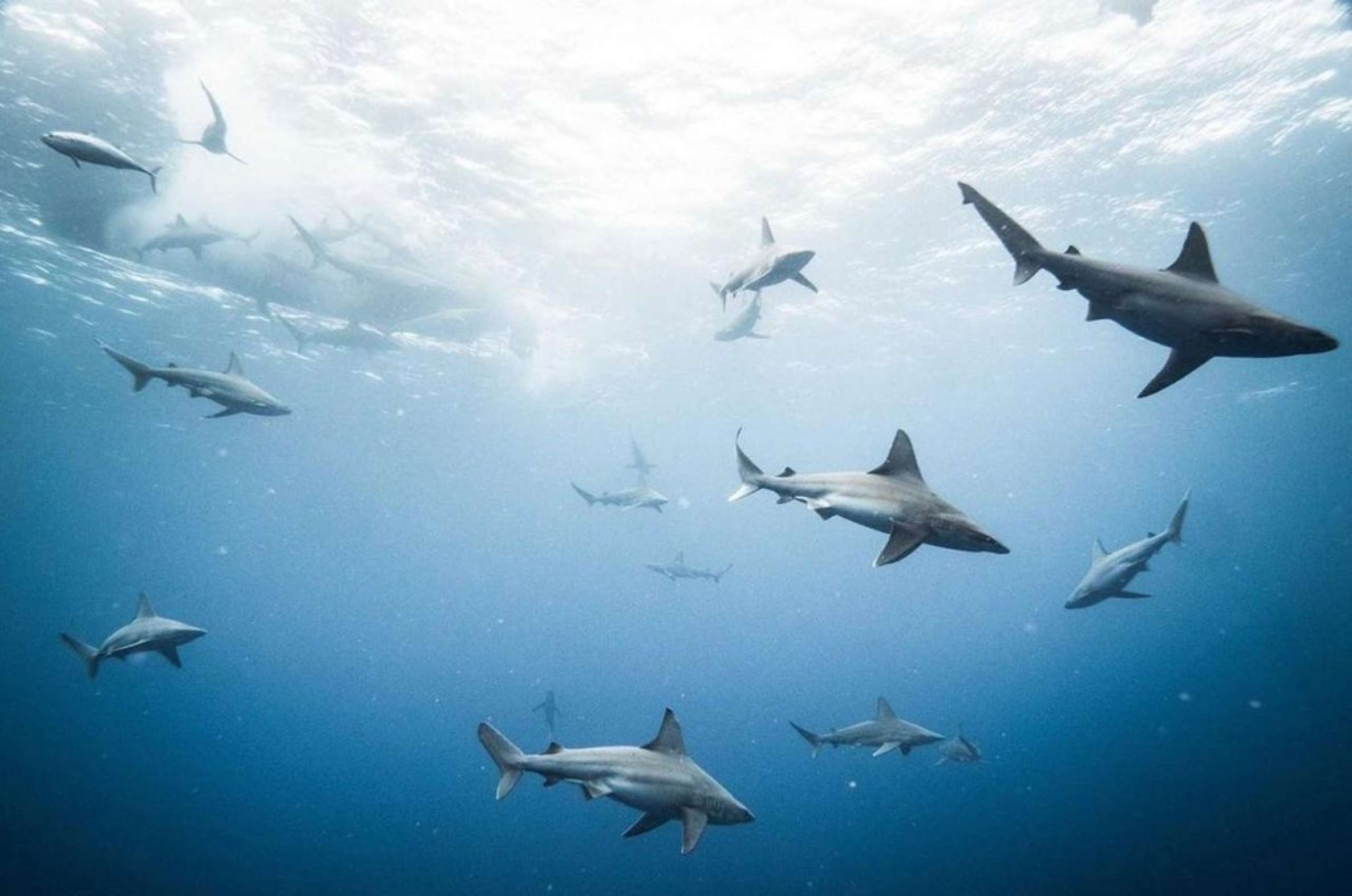
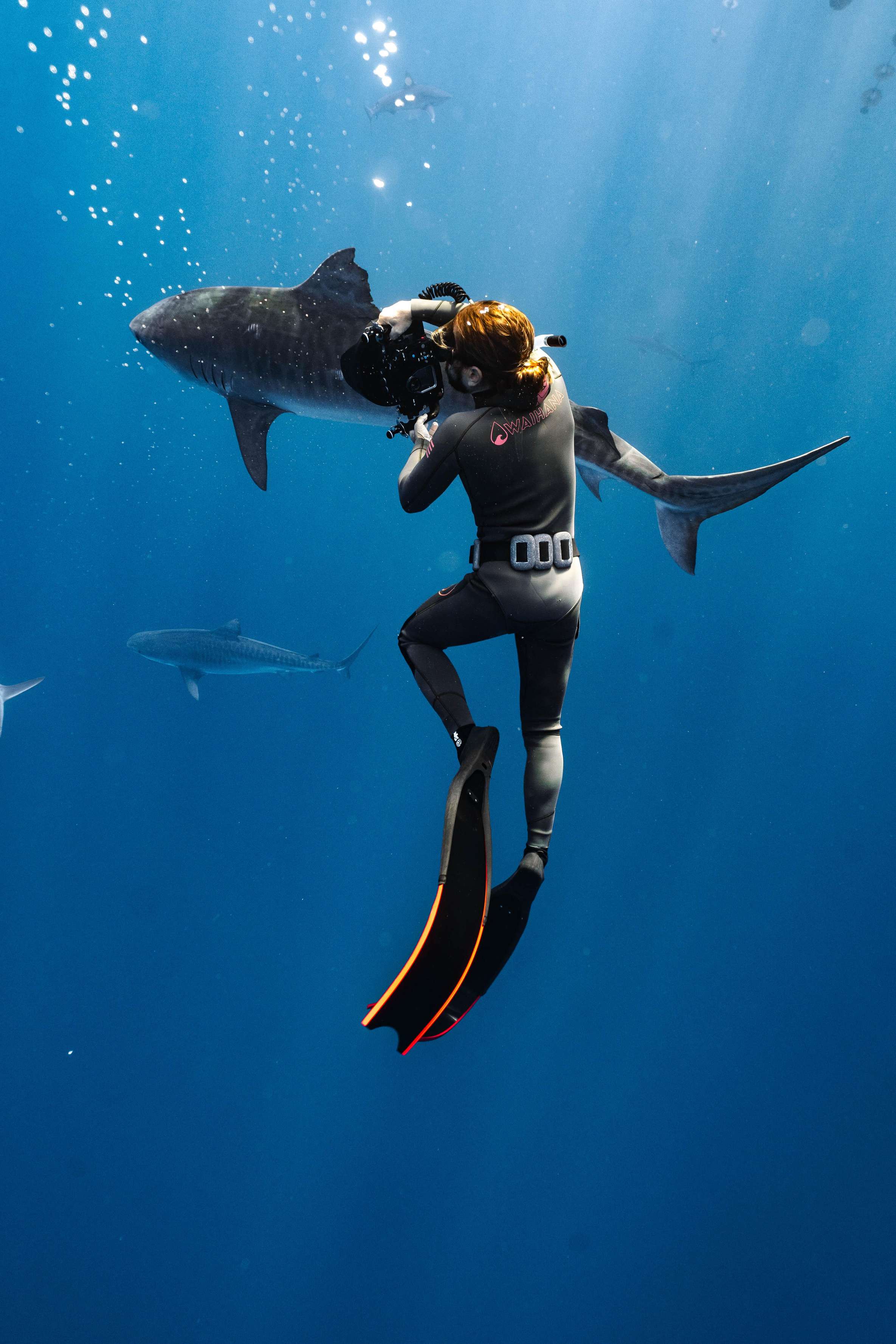
The sharks do not match the footage in your head. Floating quietly, swimmers watch them move on their own terms, circling underneath or cruising past a few feet away. Galapagos sharks mostly ignore people and feed on smaller marine life instead.
Most first-timers describe the same arc: fear dissolves within the first minute in the water, replaced by the strange calm of an animal the size of a car ignoring you completely. The guides have seen that arc a thousand times, so they talk you through the entry slowly and let it happen.
What nobody tells you
The sharks have better things to do
They feed on smaller marine life and largely ignore swimmers floating quietly
You need almost no gear
Just a mask and snorkel at the surface, no tanks and no scuba experience
The fear is front-loaded
Anxiety melts once you are in the water watching them cruise past on their own terms
What stays with people afterwards is the quiet: blue in every direction, a shark crossing below, and no metal anywhere in the frame. That memory is what the cage version cannot quite give you.
Which sharks you'll meet off Oahu, and whether they show up
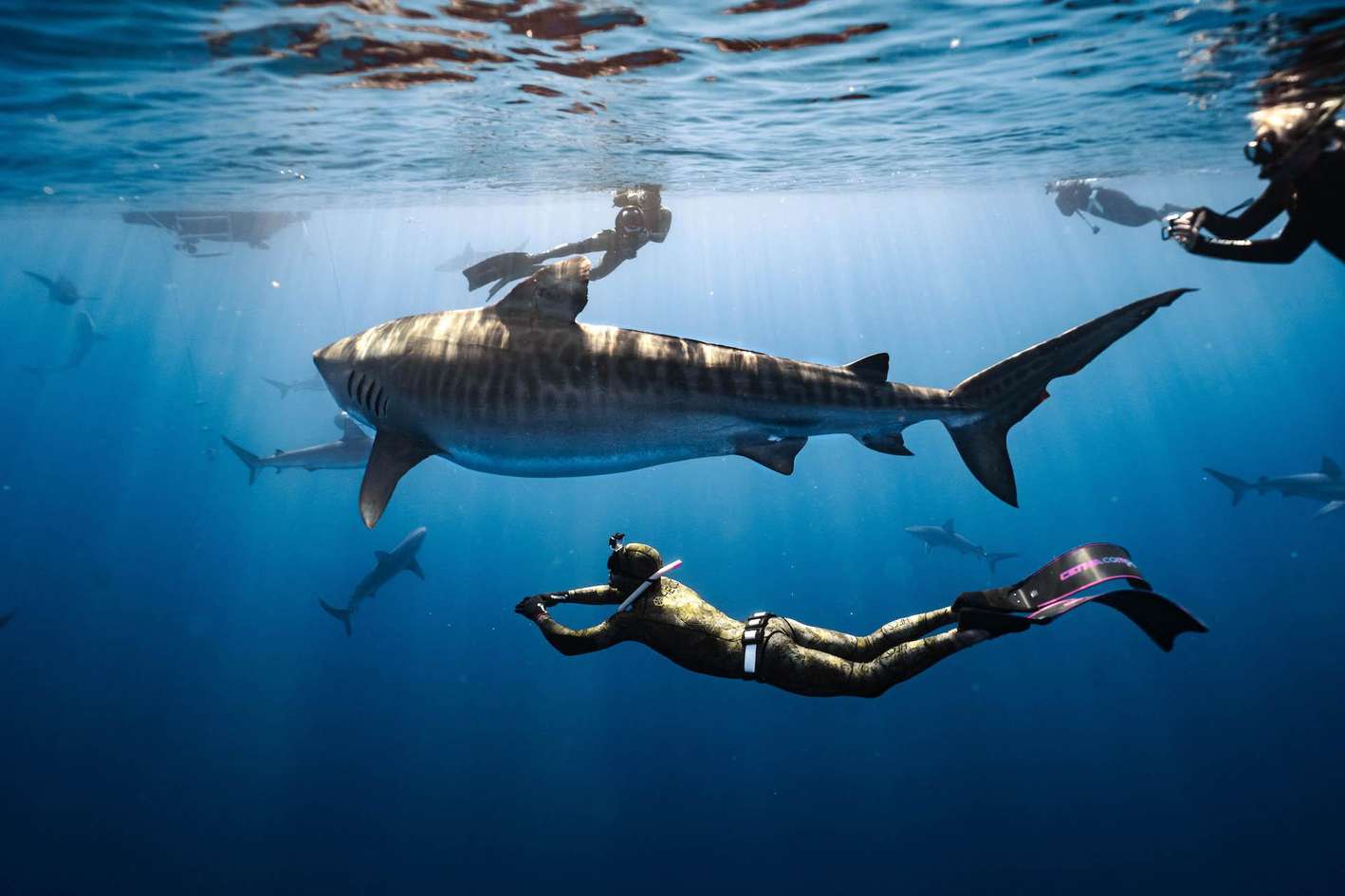
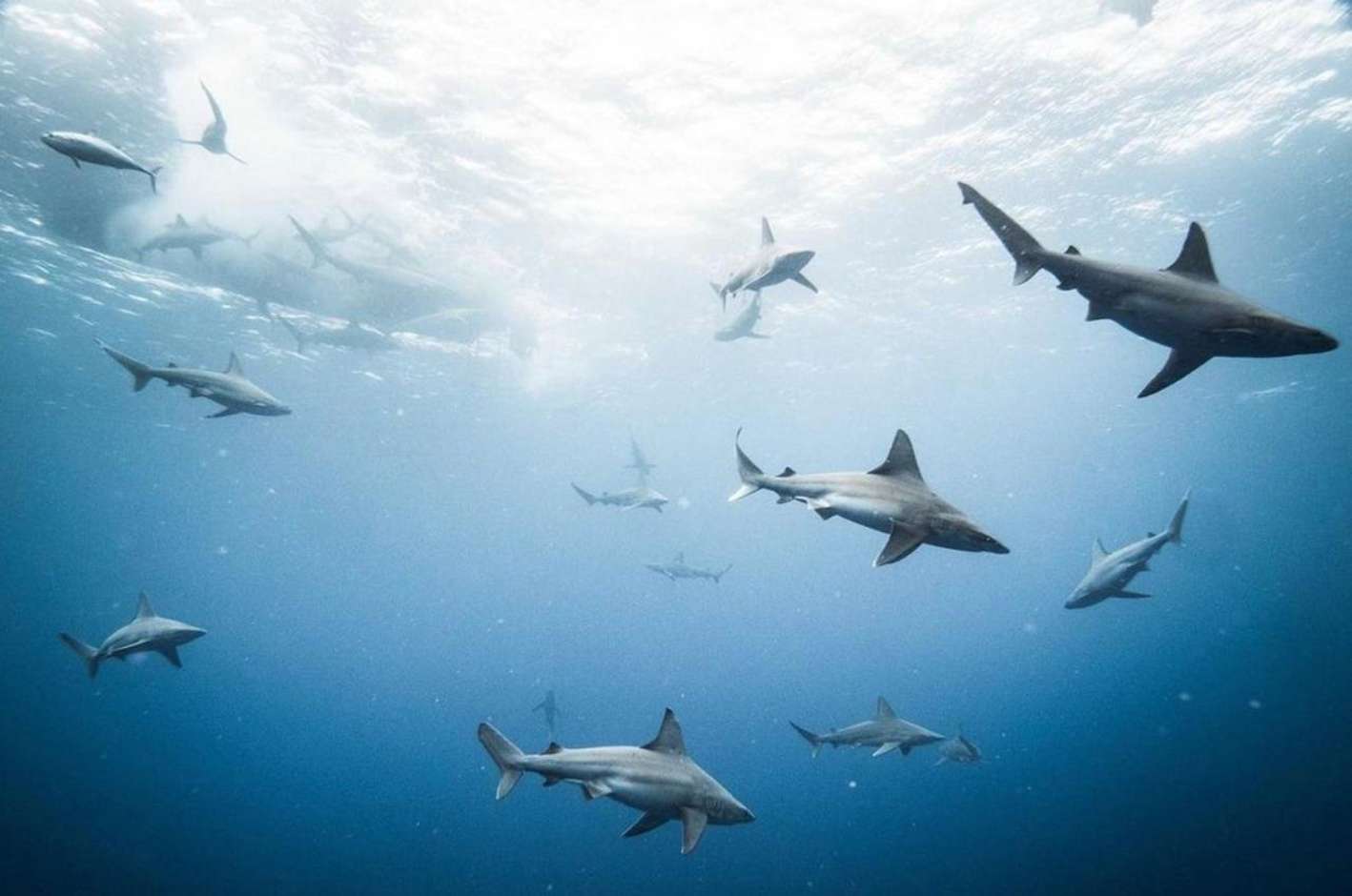
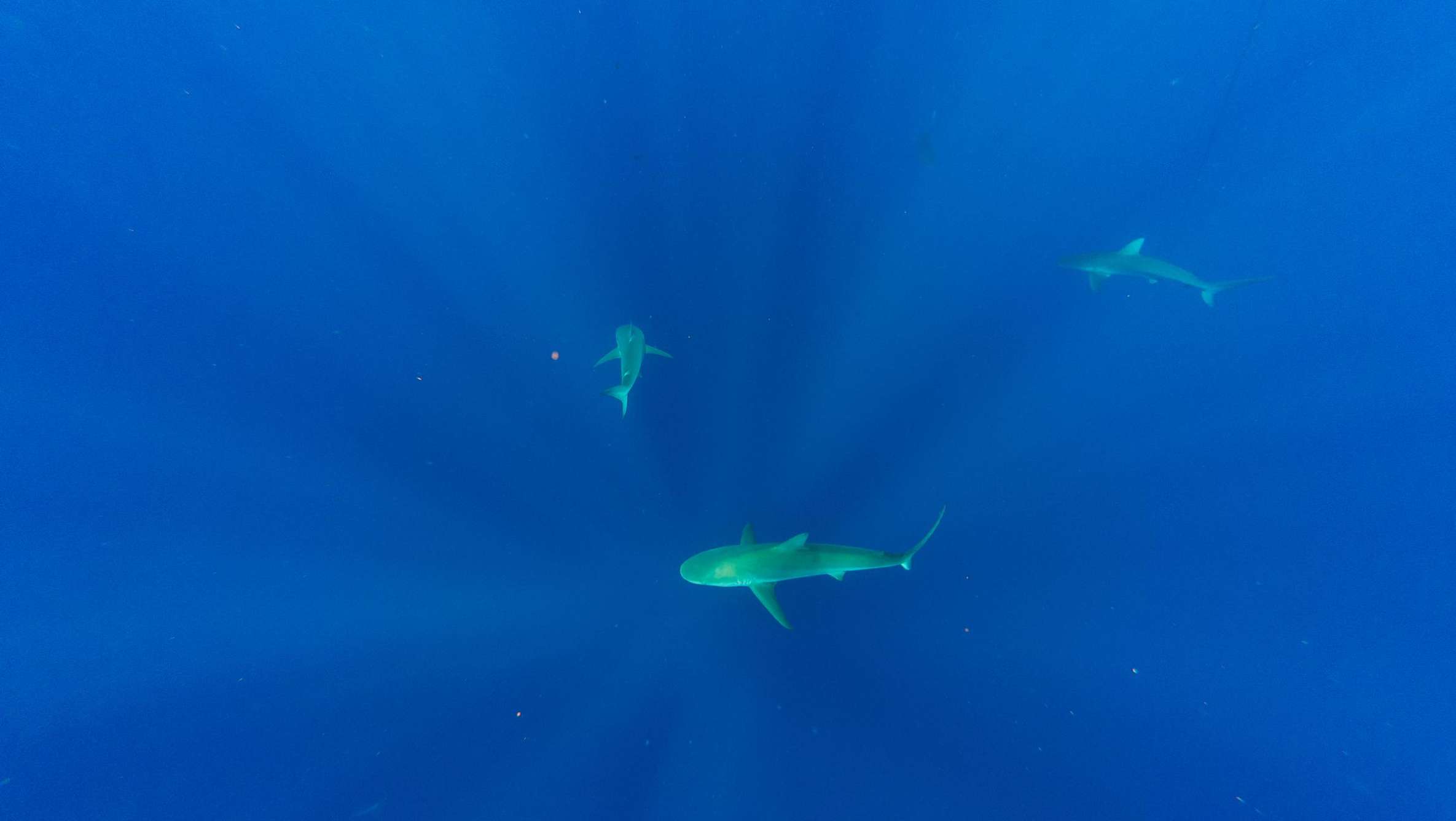
Two residents run the show. Galapagos sharks and sandbar sharks gather year-round about three miles off Haleiwa, and they are what you will almost certainly see. Around 40 shark species live in Oahu's waters, but these two own the offshore grounds.
They gather for reasons older than the tours. An upwelling current pushes plankton toward the surface, feeding small fish, which feed bigger fish, which feed sharks.
Crab fishermen have tossed old trap bait overboard there since the 1960s, so the sharks learned long ago that boats mean food. Engines alone, with no bait in the water, bring them alongside.
Tigers are the seasonal bonus, seen mainly from July through October, and late June can offer calm surface water with a chance of both tigers and resident Galapagos. Scalloped hammerheads show up less often, mostly in spring and early summer.
One operator guarantees you will see sharks in the water on its cage-free tour; none of them guarantee the species or the count. Open ocean means sightings vary by the day, and that honesty is a good sign in an operator.
How safe is swimming with sharks without a cage in Oahu?
Start with the law. Feeding or chumming sharks is illegal in Hawaii state and federal waters, so no operator here dumps blood or bait to stage a frenzy.
The sharks come to the boat's engine sound, which they already associate with the local fishing boats, and that difference matters: the animals behave naturally instead of being whipped up.
In the water, structure replaces the cage. In-water groups are capped at 6 to 8 swimmers, with a safety diver for every 6 guests at the standard ratio, watching shark body language and steering the group with gentle redirection.
A pre-dive briefing covers slow kicks, calm posture, and exit signals, and touching marine life is off the table.
The record backs the setup. Research from the Hawai'i Institute of Marine Biology found no evidence that Haleiwa's shark operations endanger public safety, and a state database of shark incidents does not identify any shark diving companies.
Myths about cageless shark diving, checked
Myth"They chum the water to get the sharks in"
Reality
Chumming and feeding sharks is illegal in Hawaii; boats attract them with engine sound alone
Myth"Swimming with sharks with no cage is reckless"
Reality
Groups of 6 to 8 swim with a dedicated safety diver under strict protocols
Myth"The sharks are aggressive"
Reality
The offshore sharks are curious about boat engines and feed on smaller marine life
The one honest caveat: stay calm in the water. Erratic splashing and sudden thrashing are the only behavior that breaks the picture, and your briefing teaches you how to avoid it.
When is the best time of year and day to go shark diving in Oahu?
May through September is the window to aim for. The sea sits flat on more than four days in five, waves stay small, the water warms to about 80 degrees, and it clears enough to see 150 feet down. July is the best of it, with calm water on 99 percent of days.
Winter tells a different story. North Pacific swells arrive from November through February, calm days drop to 13 percent in January with peak waves averaging 2.2 meters, and visibility falls to a more variable 30 to 60 feet. Sharks are still there in winter, but swells cancel boats.
North Shore shark diving conditions by month
August: 5 out of 5 for how busy it gets. The busiest month of the year features glassy seas, peak underwater clarity, and warm water reaching 81°F.
HighestAug to Nov
In betweenMay, Jul
LowestJun, Dec to Apr
Darker: a higher how busy it gets score, out of 5
Tap a month to read it.
July: calm sea on 99% of days. Flat-water conditions peak with 99% calm days, maximum waves near 1 meter, and warm water around 80°F.
HighestMay to Sep83 to 99% of days
In betweenMar to Apr, Oct to Nov49 to 66% of days
LowestDec to Feb13 to 31% of days
Darker months: higher, from 13 to 99% of days
Tap a month to read it.
January: waves up to 2.2 m on an average day. Heavy winter swells make the open-ocean ride and cage rough with only 13% calm days, cooler 74°F water, and higher cancellation odds.
HighestDec to Jan2 to 2.2 m
In betweenFeb to Mar, Nov1.6 to 1.8 m
LowestApr to Oct1 to 1.4 m
Darker months: higher, from 1 to 2.2 m
Tap a month to read it.
Within any day, the first boat wins. Departures between 6 am and 9 am, ideally the first out at 6 or 7 am, catch the lightest trade winds and the clearest water. Later departures watch the chop build through the afternoon, which means rougher rides and more cancellations.
So the formula is a summer date and the earliest slot. If your trip lands in December or January, build a spare morning into your plans in case the swell calls the shots.
How do you choose between Oahu's cageless shark tours?
Boat size decides more than anything else. On a small vessel carrying about six guests, the whole group stays in the water together for the entire swim. Larger boats rotate swimmers in and out, and a rotation can cut your time short while you wait your turn on deck.
Compare the details that change your day. Photos matter: some tours include crew-shot photo and video, others sell packages on board, and one operator does not allow underwater cameras on its pelagic snorkel at all, so check before you pack a GoPro.
Every Oahu cageless tour is snorkel-only, with no tanks, so scuba certifications earn you nothing here. Non-swimming companions can ride along on some boats and not others.
How to choose a cageless shark dive in Oahu
Check
Why it matters
Our pick
In-water group size
Fewer swimmers per safety diver means closer attention and no waiting your turn
Capped at 8 guests with a dedicated safety diver
Photo coverage
Crew-shot video frees you from managing a camera while floating
Photo and video package included
Swim format
All cageless Oahu tours are surface snorkels, no tanks
Snorkel gear provided, guided at the surface
Swimmer requirement
Cageless tours demand real ocean swimming ability
Snorkel experience highly recommended
The Oahu: North Shore Cageless Shark Snorkeling Tour is the pick here: two hours, small group, a safety diver beside you, and the photo package already in the price. For a confident snorkeler who wants the whole morning in the water, that combination is hard to beat.
Are you ready? fitness, swimming and age rules for Oahu cageless dives
The ocean is the test, and it is honest. Cageless tours take non-swimmers nowhere: you must know how to swim, previous snorkeling experience is highly recommended, and strong open-ocean comfort is the real requirement.
One operator lets nervous swimmers hold a safety rope connected to the boat, which is the halfway house between the cage and free swimming.
Age rules vary by boat. Some tours exclude children 4 and younger, another excludes 11 and younger, and one requires swimmers to be at least 4 feet 3 inches tall. Confident kids do fine with attentive safety divers alongside; a child who panics in deep water belongs on a cage tour instead.
Health questions have clear answers. Heart conditions rule these trips out, seasickness-prone travelers struggle, and guests with mobility limits must get in and out of the boat on their own. Anyone pregnant, or out of shape with health concerns, should talk to a doctor before booking.
If you read this and hesitate about your deep-water comfort, fix that first: a few private swim lessons in open water before your trip cost less than a wasted booking.
How the day unfolds on an Oahu cageless shark dive
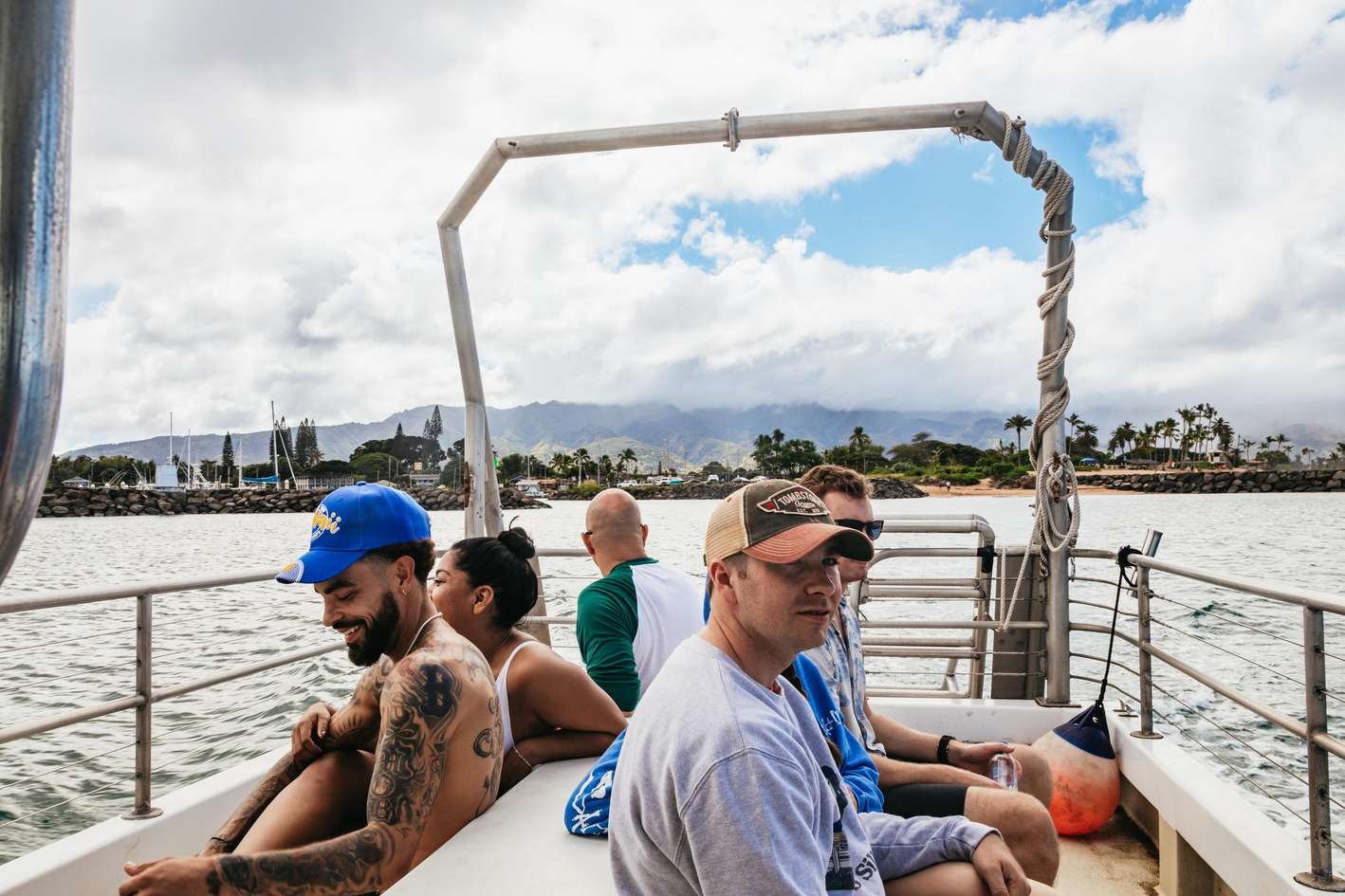
The clock on a two-hour trip is not what the title suggests. Boat transits eat 15 to 25 minutes each way between Haleiwa Harbor and the dive grounds three miles offshore, and safety briefings plus gear setup take their share before anyone gets wet.
Actual water time runs 30 to 60 minutes out of a trip advertised at 1.5 to 2 hours. Knowing that in advance is the difference between a great morning and a feeling of being shortchanged.
How the morning unfolds
1
Check-in at the harbor
Arrive 30 minutes early for waivers and the safety briefing
Late arrivals cannot be accommodated on strict schedules
2
Boat run offshore
15 to 25 minutes to the dive grounds
The engine sound itself starts drawing sharks
3
Gear up and enter
Mask and fins on, briefing fresh in mind
Slow kicks and calm posture from the first minute
4
Time with the sharks
30 to 60 minutes floating with the group
Hold the safety rope any time you want
5
Ride back
Dock by the two-hour mark
Barefoot on deck the whole way
Plan nothing urgent for an hour after. You will want the time to eat, look at the crew's footage, and get your land legs back.
Getting to Haleiwa Harbor from Waikiki and Honolulu
Every cageless tour leaves from Haleiwa Small Boat Harbor on the North Shore, not from Waikiki, and the reason is simple: the resident sharks live off the North Shore, where fishing boats have worked for decades. Looking for a departure from Honolulu is the mistake to avoid.
The drive runs H-1 West to H-2 North through Central Oahu, then Kamehameha Highway (Route 99) into Haleiwa. That is roughly 32 to 35 miles, taking 45 to 75 minutes in the morning.
Budget 1.5 to 2 hours total from Waikiki so you reach the docks 30 to 45 minutes before departure for check-in, waivers, and the briefing.
Parking solves itself. Public parking at Haleiwa Boat Harbor is free and roomy, with space for trucks and trailers, so skip the rideshare math and take your own car if you have one. Set your alarm for the dark: a 6 am boat means leaving Waikiki before 4:30 am.
What to bring on your Oahu cageless shark dive boat
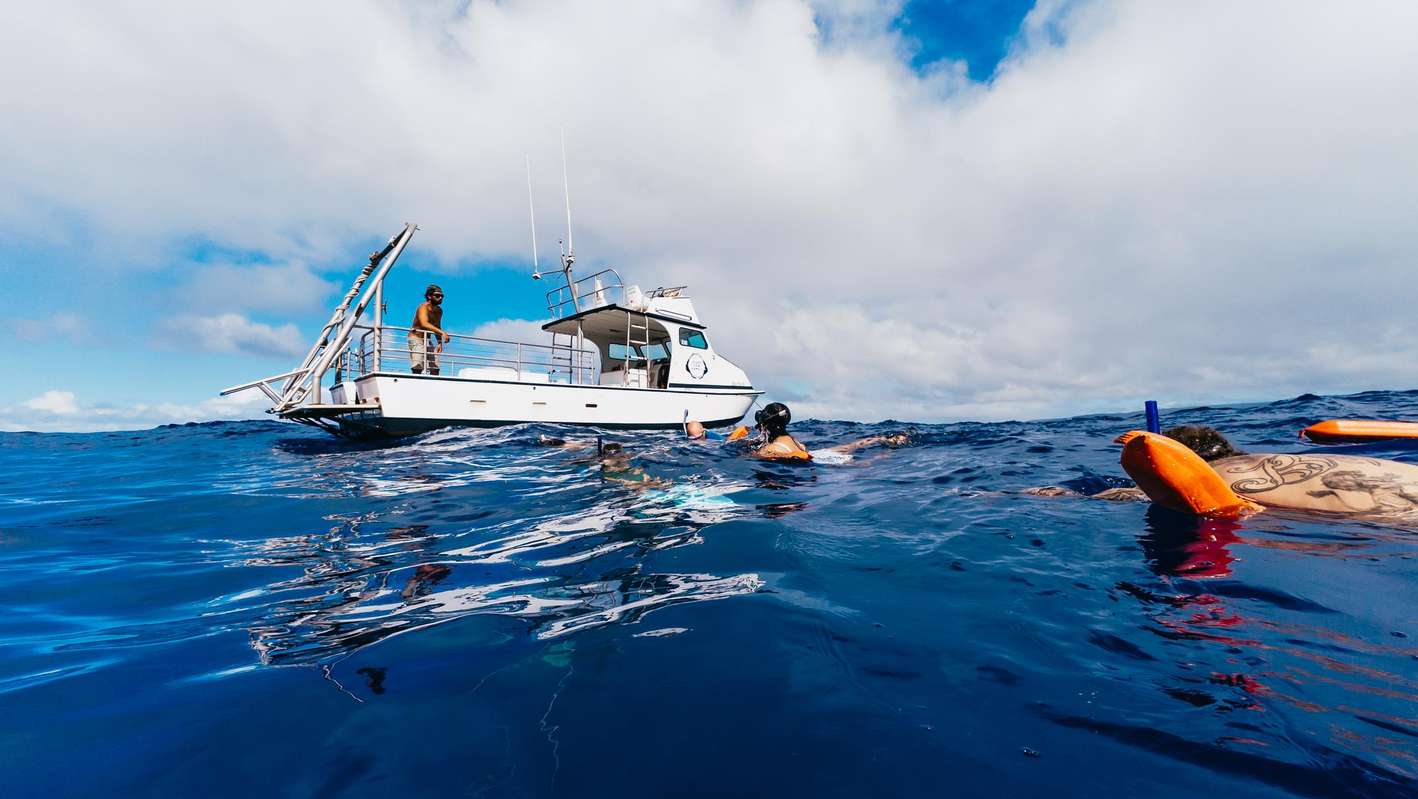
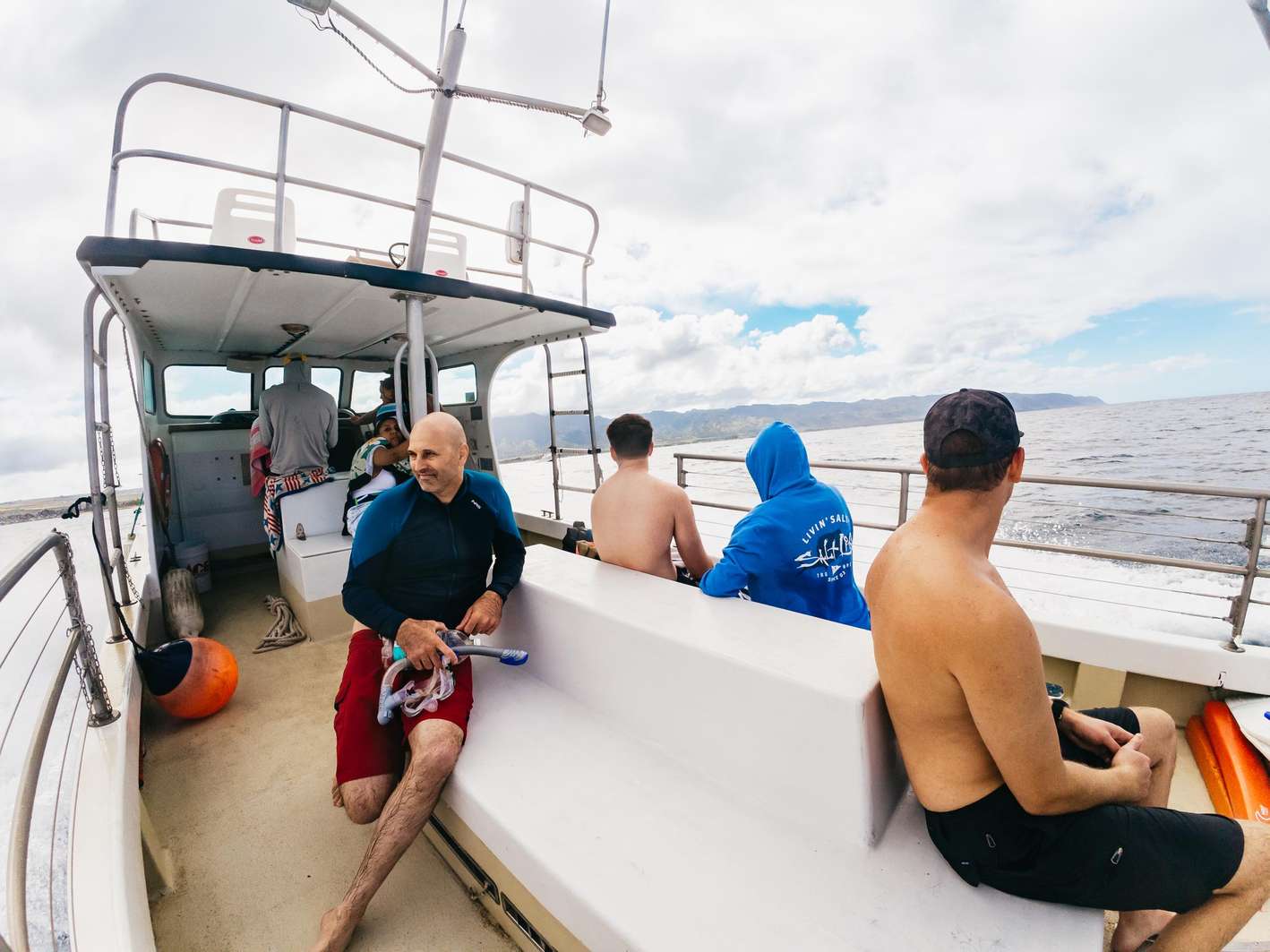
Boarding is barefoot. Haleiwa charter boats make everyone take off their shoes before stepping aboard, so wear slip-on sandals you can leave in a dockside bin. Pack everything else in a waterproof dry bag, because the open deck has no sealed storage and the 15- to 20-minute ride offshore takes spray.
What to pack and wear on the boat
Slip-on sandals or flip-flopsOperators require all shoes to be removed prior to boarding and placed in dockside bins; you will be barefoot on the boat.
Waterproof dry bagOpen-deck boats take on wind spray and lack sealed compartments, so electronics and spare clothes must be protected.
Towel and swimwearWear your swimwear underneath your clothing before arrival, as there are no changing facilities on board.
Light windbreaker or hoodieThe 15- to 20-minute return ride across open water feels chilly with wet skin and ocean breezes.
Reef-safe sunscreen and sunglassesHawaii law mandates non-nano mineral sun protection; pair with polarized sunglasses secured by a strap.
Seasickness medicationThe boat drifts in open-ocean swells at the dive site; take medication at least one hour before departure.
Dress for the season. Water runs 80 to 82 degrees by late summer, when a UV rash guard is usually enough. From December through May it dips to the mid-70s, and a 1.5 to 2 mm shorty or neoprene top earns its place on longer floats.
Start the seasickness plan the night before, long before you reach the dock. Take medication both the evening before and the morning of the trip, because once the swells are tossing the boat, pills taken on the water do nothing.
Adjust your mask and snorkel before you get in, too: fiddling with straps while a shark cruises below is a bad use of the moment.
A GoPro on a stick covers the photos if you have your own; otherwise the crew's camera does the work.
What happens if Oahu weather cancels your cageless shark dive
Winter swells are the one force that cancels this trip. From November through March, big North Shore surf can shut harbor tours for days or even a week at a time.
Charters also call off departures when high surf makes the harbor mouth hazardous, visibility drops below 10 to 15 feet from churned sediment, or strong winds stir up unsafe chop.
Rain and large surf do not automatically kill a trip. The calls that matter are the ones where safety divers could not track swimmers in turbulent water, which is why cageless swims are the first trips canceled when the surface turns ugly.
If the day changes
If this happens
What happens then
High surf or rough seas
The operator cancels, and you choose between a new date or a full refund
Cancellation notice
Can come up until the scheduled start time, with advance notice when possible
You need to change plans
Cancel up to 24 hours in advance for a full refund on the standard terms
Read that as the worst case being manageable: a rebooked morning or your money back. Book the dive early in your trip and a weather call only means a new date.
What else to do around Haleiwa after your Oahu shark dive
You dock by mid-morning with salt drying on your arms and a story already forming. Haleiwa town sits minutes away, and the first stop is food. Haleiwa Bowls, Haleiwa Joe's, and Haleiwa Beach House all sit near the harbor across from Haleiwa Beach Park, and an acai bowl tastes better after sharks.
Walk it off along Kamehameha Highway through the old plantation-era town. Matsumoto Shave Ice is the classic stop, and the 1921 ʻAnahulu Stream Bridge is a short stroll from the shops.
With the afternoon open, drive up the coast. Waimea Bay is about 16 minutes north and rewards a calm-summer day with snorkeling, and Sunset Beach sits a little further.
You could pay for a boat tour to see green sea turtles, but they are easy to spot from Oahu shorelines at the required distance, so save the money for shave ice.
Amazing!!! Can't describe how intense and great it was! Totally recommend cageless swimming. The guides were super informative and attentive, I never felt endangered, and there were plenty of sharks to admire.
For a confident snorkeler, cageless shark diving in Oahu is the better morning: 30 to 60 minutes in open blue with resident Galapagos and sandbar sharks, unobstructed photos, and a safety diver beside you.
Take the earliest boat, a summer date if you can, and seasickness pills the night before. The ocean sets the terms; your job is to be ready for them.
Go ifYou swim comfortably in open ocean and have snorkeled beforeYou can take a 6 am or 7 am boat for the calmest waterYou want the full silhouette of a shark with no bars in the photo
Skip ifYou are a non-swimmer or anxious in deep water; a cage tour suits you betterYou have a heart condition, severe seasickness, or limited mobilityYour whole trip falls in peak winter swell season with no spare morning
Straight answers about open-water shark swims off Oahu, from depths and safety to who can join.
Haleiwa2026
Floating in 150-foot blue with a shark gliding below, no bars in the way. Take the first boat out, and stash your camera in a dry bag.
How deep is the water where cageless shark diving happens in Oahu?
You swim about 3 miles off Haleiwa Harbor, where the sea floor sits roughly 250 to 300 feet down and no bottom is visible. Visibility often reaches 150 feet, so you see sharks coming long before they arrive.
Do I need scuba certification for open shark diving in Oahu?
No, and tanks are never used. Every cage-free shark tour on Oahu is a guided surface snorkel, with mask, fins and usually a wetsuit top provided.
How strong a swimmer do I need to be for cageless shark diving?
Confident swimming is required, and snorkel experience is highly recommended. You hold position as a group in open ocean with no bottom or edge, so weaker swimmers and non-swimmers should choose a cage tour instead. Some operators let you hold a safety rope attached to the boat.
Is it safe to swim with sharks in open water without a cage?
Research from the Hawai'i Institute of Marine Biology found no evidence that Haleiwa shark tours threaten public safety, and Hawaii's state shark-incident database lists no dive operators. Galapagos and sandbar sharks are calm around quiet swimmers and typically circle beneath the group or pass by on their own terms.
Who is in the water with me watching the sharks?
A trained safety diver. Standard ratios run one diver per six guests in the water, and in-water groups are capped at six to eight swimmers. Divers track the sharks' body language and keep the group positioned with gentle redirection.
What sharks will I see on a cageless dive off Oahu?
Galapagos sharks and sandbar sharks gather year-round about 3 miles off Haleiwa. Tiger sharks show up mainly from July through October, and scalloped hammerheads appear less often in spring and early summer.
Do operators bait or chum sharks to attract them?
No, baiting or chumming is illegal in Hawaii's state and federal waters. Sharks are drawn by the natural sound of the boat's engine, which they associate with the fishing boats that have worked these waters for decades.
Are sharks guaranteed on every cageless shark tour?
Sightings vary day to day because these are wild animals in open ocean. One operator guarantees sharks in the water on its cage-free tour, but no one guarantees which species or how many you will see.
How much time do I actually spend in the water?
Expect 30 to 60 minutes in the water on a 1.5 to 2 hour tour. The rest goes to the 15 to 25 minute boat ride each way, the safety briefing and gear setup.
When is the best time for cageless shark diving in Oahu?
May through September brings the calmest seas, with waves under 1.5 meters on 83% to 99% of days and the clearest visibility. Winter swells from November through April bring rougher rides and more cancellations, so book early morning departures whenever you go.
Can children join a cageless shark dive?
It depends on the operator: some exclude children 4 and younger, others 11 and younger, and one requires guests to be at least 4 feet 3 inches tall. Confident young swimmers can join with safety divers present.